9 Best Portable Power Stations for Camper Vans (November 2026)
The best portable power stations for camper vans include the Anker SOLIX C1000 Gen 2 Portable Power (best overall for camper van power), the ZeroKor Portable Solar Generator 300W for first-time van builders, and the DJI Power 1000 V2 Portable Power Station for quiet nights in a camper van.
On this page (8 sections)
- The best portable power stations for camper vans
- How these camper van power stations compare
- How we compared these power stations for camper vans
- What capacity do you need for a camper van power station?
- How fast should a camper van power station recharge?
- What output do you need for a camper van fridge and heater?
- Portable power station or built-in house battery for a camper van?
- Which portable power station is best for your camper van?
The best portable power station for camper van use is the Anker SOLIX C1000 Gen 2, a 1,024Wh unit with 2,000W output and a full AC recharge in 49 minutes. Choose the BLUETTI Elite 300 if your van has a TT-30 inlet or a 12V fridge and diesel heater, or the DJI Power 1000 V2 if the station sits close to your bed at night.
A camper van asks more of a power station than a tent does. The station has to charge during short shore-power stops, fit in a cabinet, stay quiet while you sleep, and still run a fridge overnight.
Those needs pull in opposite directions, which is why the best portable power station for camper van setups depends on how you travel.
This guide covers nine units across four sizes. The first five handle real van loads, from a kettle to a 12V compressor fridge.
The last four cover smaller jobs like phones, cameras and a work laptop. If you plan to wire a fixed inverter instead, our 3000 watt inverter for rv guide covers the install side.
Our picks at a glance
-
1
 Best overall for camper van power
Anker SOLIX C1000 Gen 2 Portable Power
9.3/10 our score
See it on Amazon -
2
 Best for first-time van builders
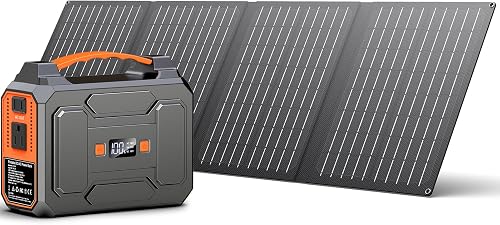
ZeroKor Portable Solar Generator 300W
9.1/10 our score
See it on Amazon -
3
 Best for quiet nights in a camper van
DJI Power 1000 V2 Portable Power Station
8.9/10 our score
See it on Amazon
- 4
 Check it
BLUETTI Elite 300 Portable Power Station
Best for vans with a 12V fridge and heater - 5
 Check it
EBL Portable Power Station 1000W
Best for light van life on a budget - 6
 Check it
Apowking Solar Powered Generator 100W
Best for small solar setups - 7
 Check it
ZeroKor Portable Power Station 120W
Best for grab-and-go day trips - 8
 Check it
DYNESS Portable Power Station 300W
Best for mixed AC and DC van gear - 9
 Check it
BailiBatt Portable Power Station 300W
Best for two laptops on the road
The best portable power stations for camper vans
The Anker SOLIX C1000 Gen 2 wins overall because it packs 2,000W and a 49-minute recharge into 11.3 kg. Every other pick here earns its place on one specific van need, so read the badge before the spec sheet.
Anker SOLIX C1000 Gen 2 Portable Power: Best overall for camper van power
- 1,024Wh LiFePO4 battery
- 2,000W output, 3,000W peak
- Full AC recharge in 49 minutes
- 10 ports and 10 ms UPS backup
A light 1kW-class station that charges from empty in under an hour, so a single lunch stop on shore power covers most of a van's daily needs.
Pros
- Fast 49-minute AC recharge
- 2,000W runs kettles and induction plates
- 10 ms UPS keeps a CPAP or laptop alive
- Lighter than most 1kWh rivals
Cons
- No battery expansion port
- UltraFast charging slows in cold weather
Anker's C1000 Gen 2 suits the van owner who moves between campsites and shore power. Its 2,000W output runs a kettle or an induction plate, and the 10 ports mean the fridge, laptop and phones can stay plugged in together.
The headline number is the recharge: a full AC charge in 49 minutes at 1,600W, which you switch on in the Anker app. A single lunch stop on hookups can cover the next day's power.
Anker says the battery holds at least 80% capacity after 4,000 cycles, which fits years of weekend use.
Two limits matter in a van. The unit has no battery expansion port, so buy the capacity you need now.
And Anker notes UltraFast charging slows when the battery is cold, so a winter trip will recharge more slowly.
For solar, Anker says 600W of panels refills it in 1.8 hours. The 10 ms UPS switchover also keeps a CPAP or laptop running through a power cut at a campsite hookup.
ZeroKor Portable Solar Generator 300W: Best for first-time van builders
- 300W pure sine wave output
- 280Wh battery
- 60W folding solar panel included
- BMS protection and cooling fan
A solar panel comes in the box, so you can charge phones, a laptop and lights from the sun without buying a separate panel first.
Pros
- 60W solar panel included
- Pure sine wave AC output
- Weighs just 5.1 lb
- Built-in MPPT solar charging
Cons
- Not enough output for a van fridge or kettle
- Solar junction box is not waterproof
ZeroKor's 300W station is the pick for someone building out their first van. It arrives with a 60W folding solar panel, so there's no second purchase before you can charge from the sun.
The 280Wh battery and 300W pure sine wave output cover phones, a laptop, a camera and LED lights. The built-in MPPT controller gets the most from the panel, and the panel's monocrystalline cells convert at 20.5%, which helps in low light.
Its size sets the ceiling. ZeroKor warns that devices over 300W can damage the unit, so a van fridge, kettle or hair dryer is out.
The solar panel's junction box also isn't waterproof, so keep it dry when it rains.
Weighing 5.1 lb, it stows in a cabinet or under a seat. Treat it as a solar starter kit and add a bigger station when your appliances grow.
DJI Power 1000 V2 Portable Power Station: Best for quiet nights in a camper van
- 1,024Wh LFP battery
- 2,600W stable output
- 0 to 80% in 37 minutes
- Runs as low as 26 dB
DJI's 26 dB claim makes this the pick when the station sits close to the bed, and 2,600W covers most van appliances at once.
Pros
- Very quiet 26 dB operation
- 2,600W stable output
- 37-minute recharge to 80%
- Dual 140W USB-C ports
Cons
- Needs a separate adapter for solar or car charging
- Heavier and larger than the Anker
DJI's Power 1000 V2 is the choice when the station lives near your head at night. DJI rates its noise as low as 26 dB, and 2,600W of stable output runs almost any van appliance.
The 1,024Wh LFP battery reaches 80% in 37 minutes, the quickest partial charge in this group. Dual 140W USB-C ports deliver 280W total for two laptops or a camera and a phone.
A 10 ms UPS switchover covers a router or a laptop during an outage.
The trade-off is how you charge it off-grid. DJI does not build in MPPT or a car charging module, so solar panels and a 12V car feed both need a separate compatible adapter.
Budget for that before you rely on the sun.
It's also larger and heavier than the Anker, so check your cabinet depth. If you mostly charge on hookups and want quiet nights, that size is easy to accept.
BLUETTI Elite 300 Portable Power Station: Best for vans with a 12V fridge and heater
- 3,014Wh LiFePO4 battery
- 2,400W output, 4,800W surge
- TT-30 RV outlet and 12V/30A DC
- 10 ms UPS backup
The only pick here with a TT-30 RV port and a 12V/30A DC output, so a camper van fridge, pump and diesel heater plug straight in.
Pros
- TT-30 RV outlet built in
- 12V/30A DC for fridges and diesel heaters
- 3,014Wh for long off-grid stretches
- 10 ms UPS for a laptop or router
Cons
- Weighs 58 lb, so two people should lift it
- Premium price tier
BLUETTI's Elite 300 is built for the van that already has camper wiring. Its TT-30 RV outlet and 12V/30A DC output take a shore-style cord, a 12V compressor fridge, a water pump and a diesel heater without adapters.
The 3,014Wh LFP battery is the largest here. BLUETTI says the unit is about 59% smaller than typical 3kWh stations, which matters when every inch of a van counts.
At 2,400W with a 4,800W surge, it starts resistive loads like a kettle and still has headroom.
The catch is weight. At 58 lb, this is a two-person lift into a van, and you won't move it often.
Plan a fixed spot near the electrical panel or under the bed.
Recharging is flexible: AC, solar up to 1,200W, or a car charger, with 0 to 80% in as fast as 78 minutes. The 10 ms UPS and app control round it out for full-time van life.
EBL Portable Power Station 1000W: Best for light van life on a budget
- 999Wh LiFePO4 battery
- 1,000W output, 2,000W peak
- 10 charging ports
- Weighs 17 lb
A 1kWh station you can lift with one hand, with enough ports to charge the whole van's small electronics from one box.
Pros
- Light 17 lb frame with a carry handle
- 10 ports including a 60W USB-C
- Pure sine wave AC output
- 2000+ charge cycles from its LiFePO4 battery
Cons
- 1,000W output limits kettles and hair dryers
- Slower 8 to 12 hour AC recharge
EBL's 1000W station suits the van lifer who wants 1kWh without the bulk. It weighs 17 lb and carries one-handed, so it moves from the van to a picnic table without a second trip.
The 999Wh LiFePO4 battery delivers 1,000W continuous and 2,000W peak through pure sine wave outlets. Ten ports include a 60W USB-C PD and a 10W wireless pad.
The LCD shows live wattage, battery percent and runtime, so you can see what a device is costing you.
The 1,000W ceiling is the honest limit. A 1,500W kettle or a hair dryer will trip it.
Recharging by AC takes 8 to 12 hours, which is fine on a long hookup but not on a short stop. Solar and 12V car charging fill the gap, and a slow-charge mode is available to stretch battery life.
Choose it if your van runs small appliances and you want capacity you can carry. Step up to the Anker for heat-producing devices.
Apowking Solar Powered Generator 100W: Best for small solar setups
- 146Wh battery
- 100W output, 200W peak
- 40W folding solar panel included
- Seven output ports
The cheapest way to add a panel and a small battery to a van, sized for phones, cameras and a laptop rather than appliances.
Pros
- 40W solar panel in the box
- Weighs 3.3 lb
- Seven outputs including USB-C
- Dual LED flashlight with SOS mode
Cons
- 100W output runs only small devices
- Short runtime on anything beyond phones
Apowking's 100W unit is the smallest solar setup here with a panel in the box. The 40W folding panel charges the 146Wh battery, and the whole kit weighs 3.3 lb.
Seven outputs cover two AC sockets at 100W, USB-A and USB-C quick charge ports, and a 12V DC outlet. A dual LED flashlight with strobe and SOS modes helps at a dark campsite.
The BMS handles voltage and temperature protection, with cooling vents on the back.
This is a phone, camera and tablet station. A laptop will charge, but slowly and not for long.
A van fridge or kettle is out at 100W. The solar panel kit also includes 10 DC connectors for other small generators, so it doubles as a panel you can reuse later.
Buy it for day trips and tent-side charging when the van's main battery stays home. It's the least expensive way to test solar before committing to a bigger system.
ZeroKor Portable Power Station 120W: Best for grab-and-go day trips
- 97.6Wh battery
- 120W AC output
- Weighs 2.2 lb
- USB-C input and three recharge methods
A pocket-size battery for charging a phone, a tablet or a drone between campsites, with no solar panel in the box.
Pros
- Only 2.2 lb
- Recharges by USB-C, car or solar
- Built-in three-mode flashlight
- BMS protection
Cons
- No solar panel included
- 120W cap rules out van appliances
ZeroKor's 120W model is a grab-and-go battery for the between-campsites gap. At 2.2 lb, it slips into a backpack or a door pocket and recharges a phone, tablet or drone.
The 97.6Wh battery and 120W AC output are modest, and ZeroKor warns against devices over 120W. It has two AC outlets, a DC port, USB-A and USB-C, plus a three-mode flashlight.
Recharging works by USB-C, a 12V car socket or a solar panel you supply.
That last point is the trade-off. No solar panel comes in the box, unlike the ZeroKor 300W and Apowking picks.
The runtime is also short: the car socket and USB-C input are its real strengths on the road.
It makes sense as a second battery for hikes and day trips away from the van. It won't run any van appliance, but it keeps your phone and camera alive when the main station is parked.
DYNESS Portable Power Station 300W: Best for mixed AC and DC van gear
- 256Wh LiFePO4 battery
- 300W output, 600W peak
- Six output ports
- Built-in MPPT solar charging
A LiFePO4 station with a car outlet and DC ports alongside its AC socket, so cameras, a 12V fan and a laptop all share one box.
Pros
- LiFePO4 battery with a 2-year warranty
- Car outlet and two DC outputs
- MPPT solar charging
- Pure sine wave AC output
Cons
- Only one AC outlet
- 300W limits anything with a heating element
DYNESS's 300W station fits a van with a mix of AC and 12V gear. Its car outlet and two DC outputs sit alongside one AC socket, so a 12V fan, a camera charger and a laptop share the box.
The 256Wh LiFePO4 battery delivers 300W continuous and 600W peak through a pure sine wave outlet. Built-in MPPT solar charging works with most 18V, 60W to 100W panels.
DYNESS says a full charge takes about 3.5 to 4 hours from AC, solar or car, or about 2 hours with AC and solar together. Pass-through charging lets you run devices while it refills.
The single AC outlet is the real limit. Two devices that need a wall plug must take turns.
At 300W, anything with a heating element is also out of reach. DYNESS backs it with a 2-year warranty.
It suits the camper who wants one reliable box for small electronics and a 12V fan. Our rv converter charger guide covers the fixed-install route if you outgrow it.
BailiBatt Portable Power Station 300W: Best for two laptops on the road
- 266Wh battery
- 300W pure sine wave output
- Two USB-C PD ports
- Weighs 6.5 lb
Two USB-C PD ports let a van-based remote worker charge a laptop and a phone at full speed while the AC outlet stays free.
Pros
- Two USB-C PD ports
- 7 outputs in total
- Clear LCD with wattage readout
- 24-month warranty
Cons
- No solar panel included
- 300W output suits only small devices
BailiBatt's 300W unit targets the van-based remote worker. Its two USB-C PD ports at 24W and 18W charge a laptop and a phone at full speed, leaving the AC outlet free for something else.
The 266Wh battery powers 300W continuous through pure sine wave outlets. Seven outputs in total cover two USB-A quick charge ports, a 12V car port and a DC output.
A clear LCD shows live input and output wattage. BailiBatt offers a 24-month warranty.
The 6.5 lb body is light enough for a cabinet, and the screen tells you when a device is drawing more than expected. The limits are familiar at this size: 300W rules out kettles, and no solar panel is included.
A solar panel is sold separately.
Choose it for a mobile office in a van, where two laptops matter more than a high-wattage appliance. For solar charging on the road, pair it with a folding panel.
How these camper van power stations compare
The comparison table below lines up capacity, output and weight, the three numbers that decide whether a station suits a van. Use it to shortlist two or three units before reading the full write-ups.
| Product | Best for | Capacity | AC output | Weight | Our score |
|---|---|---|---|---|---|
| Anker SOLIX C1000 Gen 2 Portable Power | overall for camper van power | 1,024Wh LiFePO4 | 2,000W (3,000W peak) | 11.3 kg | 9.3 |
| ZeroKor Portable Solar Generator 300W | first-time van builders | 280Wh | 300W | 5.1 lb | 9.1 |
| DJI Power 1000 V2 Portable Power Station | quiet nights in a camper van | 1,024Wh LFP | 2,600W | 8.9 | |
| BLUETTI Elite 300 Portable Power Station | vans with a 12V fridge and heater | 3,014Wh LiFePO4 | 2,400W (4,800W surge) | 58 lb | 8.7 |
| EBL Portable Power Station 1000W | light van life on a budget | 999Wh LiFePO4 | 1,000W (2,000W peak) | 17 lb | 8.5 |
| Apowking Solar Powered Generator 100W | small solar setups | 146Wh | 100W (200W peak) | 3.3 lb | 8.3 |
| ZeroKor Portable Power Station 120W | grab-and-go day trips | 97.6Wh | 120W | 2.2 lb | 8.1 |
| DYNESS Portable Power Station 300W | mixed AC and DC van gear | 256Wh LiFePO4 | 300W (600W peak) | 9.3 in long | 7.9 |
| BailiBatt Portable Power Station 300W | two laptops on the road | 266Wh | 300W | 6.5 lb | 7.7 |
Our score weighs specs, features and buyer feedback against what you're shopping for. A station scores high when its capacity, output, recharge speed and port layout match camper van life, not just when it has a big battery.
We also count weight, since anything heavy is hard to move in a small space.
How we compared these power stations for camper vans
We compared published specs rather than running units in a van. The factors that decided the ranking were capacity in watt-hours, continuous and peak AC output, recharge time from AC and solar, port types and weight.
Camper van use adds a few checks that a home backup buyer doesn't need. A station has to fit a cabinet, so we weighed dimensions and pounds.
It has to charge during short hookups, so AC recharge speed carried real weight. And it may sit near the bed, so we noted noise figures where a brand publishes one.
A 12V DC output or a TT-30 outlet moved a station up when it meant a fridge or heater could plug in without an adapter. Buyers often need that convenience more than another 500Wh of capacity.
Our how many batteries for 3000w inverter guide explains the math if you're sizing a fixed system instead.
What capacity do you need for a camper van power station?
Start with your daily watt-hour use. Add up each device's watts times the hours you run it, then pick a station with 20 to 30% more capacity than that total.
A laptop, phone, lights and a fan typically land near 300 to 600Wh a day. Add a 12V fridge and you're closer to 900Wh or more.
If you run small electronics only
A 250 to 300Wh station covers phones, a laptop and lights for a night. The DYNESS 300W and BailiBatt 300W fit here.
So does the ZeroKor 300W, which includes a solar panel.
If you run a fridge overnight
Plan on 1,000Wh or more. The Anker C1000 Gen 2, DJI Power 1000 V2 and EBL 1000W all sit in the 1kWh class.
The BLUETTI Elite 300's 3,014Wh is the pick for several days off-grid.
If you run high-wattage appliances
Kettles, induction plates and coffee makers draw 1,500W or more. You need 2,000W output or better, which points to the Anker, the DJI or the BLUETTI.
Check peak watts too, since motors and heating elements spike on startup.
How fast should a camper van power station recharge?
Fast recharge matters more in a van than at home. You may only have an hour on a campsite hookup before you drive on.
The Anker C1000 Gen 2 fills in 49 minutes and the DJI Power 1000 V2 reaches 80% in 37 minutes. The EBL 1000W takes 8 to 12 hours, so it needs an overnight hookup or solar during the day.
Charging from shore power
A 15A campsite outlet delivers about 1,800W, so a station that accepts 1,600W can charge in under an hour. Check the station's AC input limit before you count on a quick turnaround.
Many mid-size units accept 300 to 600W and take two to three hours.
Charging from solar
Solar depends on panel size and sun. Anker says 600W of panels recharges the C1000 Gen 2 in 1.8 hours.
DJI needs a separate adapter for solar. A portable panel in the 100 to 200W range is realistic for most vans.
Our portable power station for starlink mini guide covers panel choices for a satellite dish.
Charging while driving
A 12V car socket usually delivers under 120W, so a 1kWh station takes many hours to fill. DJI's car charging module is sold separately.
Factor drive time into your plan, or pair a modest car feed with a solar panel on the roof.
What output do you need for a camper van fridge and heater?
A 12V compressor fridge draws 40 to 70W while running and cycles on and off, so a 300W station can keep up. A diesel heater draws more at startup and needs a 12V/30A DC feed to run reliably.
That combination is why the BLUETTI Elite 300 stands out: it's the only pick here with a dedicated 12V/30A DC output.
Running a 12V fridge
A fridge on an AC adapter loses some efficiency in the conversion. A station with a 12V DC output avoids that loss.
The BLUETTI's 12V/30A port takes a fridge directly, while the Anker and DJI run one through their AC outlets.
Running a diesel heater
Diesel heaters pull a heavy current at ignition and then settle to a lower draw. The BLUETTI's 12V/30A output is rated for that load.
For the other stations, a 12V feed from a house battery is often the better answer.
Running a CPAP or laptop
A 10 ms UPS switchover keeps a CPAP or laptop running when shore power drops. The Anker, DJI and BLUETTI all list a 10 ms switchover.
That matters if you sleep with a CPAP and move between hookups and wild camping. Ask your doctor about backup power for medical devices before relying on a station.
Portable power station or built-in house battery for a camper van?
A portable station suits weekend vans and renters, while a built-in system suits full-time van life. A portable unit needs no wiring, moves with you and can come out when you sell the van.
A house battery, inverter and converter charger charge from the alternator and shore power and free up counter space. If you go the built-in route, read our rv converter charger guide before buying parts.
Our 3000 watt inverter for rv guide covers the inverter side. A middle path works well for many vans: a portable station for now, with wiring planned for later.
Which portable power station is best for your camper van?
The Anker SOLIX C1000 Gen 2 is the best portable power station for camper van trips for most people, thanks to its 2,000W output and 49-minute recharge at a carryable 11.3 kg. Pick the BLUETTI Elite 300 when your van has a TT-30 inlet or a 12V fridge and diesel heater.
Pick the DJI Power 1000 V2 when the station sits near the bed and quiet matters. For a first van build on a budget, the ZeroKor 300W with its included solar panel is the low-cost start.
For a remote-work van, the BailiBatt 300W's two USB-C PD ports are the practical pick. Any of the nine here will charge a phone; the one you choose should match the biggest appliance you plan to run.
Our top 3 picks at a glance
-
1
Best overall for camper van power
Anker SOLIX C1000 Gen 2 Portable Power
9.3/10 our score
See it on Amazon -
2
Best for first-time van builders
ZeroKor Portable Solar Generator 300W
9.1/10 our score
See it on Amazon -
3
Best for quiet nights in a camper van
DJI Power 1000 V2 Portable Power Station
8.9/10 our score
See it on Amazon
Frequently asked questions
How long does a 1,000Wh power station last in a camper van?
Runtime depends on the load. A 1,000Wh station runs a 50W laptop for roughly 18 hours, or a 600W kettle for under two hours.
Estimate each device's watts, divide the station's watt-hours by that figure, then allow some loss for the inverter.
Can you charge a portable power station while driving?
Yes. Most stations recharge from a 12V car socket or a cigarette lighter adapter, though the car input is slower than AC or solar.
DJI's Power 1000 V2 needs a separate car charging module for this.
Plan a longer drive or pair car charging with a solar panel.
Is a power station better than a van's built-in house battery?
A portable station suits renters, weekend vans and anyone who wants power without wiring work. A built-in house battery with a proper inverter and converter charger wins for full-time van life, since it charges from the alternator and shore power and leaves more counter space free.
What size solar panel charges a camper van power station?
Match the panel to the station's solar input limit. Anker says the C1000 Gen 2 takes up to 600W of solar and recharges in 1.8 hours.
The ZeroKor 300W comes with a 60W panel in the box.
Panels above a station's limit won't speed up charging.


