9 Best Portable Power Stations for Car Camping (November 2026)
The best portable power stations for car camping include the Jackery Explorer 300 Portable Power Station for most car campers, the Anker SOLIX C1000 Portable Power Station for long trips with an electric cooler, and the Jackery Explorer 1000 v2 Portable Power Station for fast top-ups at a campsite hookup.
On this page (9 sections)
- The best portable power stations for car camping
- How these power stations compare
- How we compared these car camping power stations
- What size power station do you need for car camping?
- How fast can a car camping power station recharge from your vehicle?
- Which car camping power station runs a fridge overnight?
- What should you check before buying a power station for car camping?
- Can a portable power station run an RV or trailer setup?
- Verdict: which car camping power station should you buy?
The best portable power station for car camping is the Jackery Explorer 300, because 292Wh, 300W and 7.1 lb cover phones, lights, a laptop and a CPAP machine without weighing down your trunk. Choose the Anker SOLIX C1000 if you run a cooler or cook with electricity, and the MARBERO 88Wh for the walk from the car to the tent.
Car camping splits into two jobs. One is keeping small gear alive from the trunk to the campsite.
The other is running a fridge, a kettle or a hot plate off the vehicle's space and weight limits. This guide sorts the best portable power stations for car camping by which job they do well.
If your setup is closer to an RV than a car, the same battery math applies. Our guide to the best 3000 watt inverter for RV use covers the bigger draws, and how many batteries for a 3000W inverter explains why capacity grows so fast once you add a fridge or microwave.
Our picks at a glance
-
1
 Best for most car campers
Jackery Explorer 300 Portable Power Station
9.7/10 our score
See it on Amazon -
2
 Best for long trips with an electric cooler
Anker SOLIX C1000 Portable Power Station
9.6/10 our score
See it on Amazon -
3
 Best for fast top-ups at a campsite hookup
Jackery Explorer 1000 v2 Portable Power Station
9.6/10 our score
See it on Amazon
- 4
 Check it
BLUETTI Portable Power Station AC180
Best for powering a fridge overnight - 5
 Check it
BLUETTI Elite 100 V2 Portable Power Station
Best for quiet overnight camping - 6
 Check it
EF ECOFLOW Portable Power Station Delta 3
Best for solar refills on the road - 7
 Check it
EF ECOFLOW Portable Power Station RIVER 2
Best light setup for tent and tailgate - 8
 Check it
Anker SOLIX C1000 Gen 2 Portable Power
Best for rainy-weather car camping - 9
 Check it
MARBERO Portable Power Station 88Wh
Best for a day hike from the car
The best portable power stations for car camping
The Jackery Explorer 300 wins overall for weight and simplicity. Every other station here earns its place by solving one problem the 300 cannot: a fridge that runs all night, a campsite hookup that has to top up fast, or a solar-only trip far from any outlet.
Jackery Explorer 300 Portable Power Station: Best for most car campers
- 292Wh LiFePO4 battery
- 300W AC output, 600W surge
- 7.1 lb with built-in handle
- Car port recharge in about 4 hours
The lightest pick here and the easiest to move from trunk to tent. Enough power for phones, a laptop, camera batteries and a CPAP machine.
Pros
- Light enough to carry one-handed
- LiFePO4 cells rated for 4,000 cycles
- Two AC outlets plus USB-C PD and car port
Cons
- 300W limit rules out most cooking appliances
- No expansion battery support
The Explorer 300 suits the camper who packs a duffel and a cooler into a sedan. At 7.1 lb with an integrated handle, it goes from the trunk to the picnic table without a second trip.
Two AC outlets, a 100W USB-C port and a 12V car port cover a laptop, two phones and a camera charger at once.
Its 292Wh battery holds enough for a night of phone charging and a morning of coffee-grinder use. The 300W output covers small gear and shuts off when a load goes over the limit.
For a CPAP machine on a weekend trip, this is the size that fits in a carry bag.
The LiFePO4 cells are rated for 4,000 cycles to 70%. A 100W solar panel takes it to 80% in about 2.8 hours, and the car port takes about 4 hours.
The trade-off is power. A 12V fridge or an induction plate needs more than 300W, and this station cannot run either.
It is the best pick for most people because most car campers charge small gear, not cook.
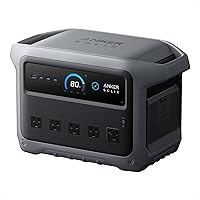
Anker SOLIX C1000 Portable Power Station: Best for long trips with an electric cooler
- 1,056Wh LiFePO4 battery
- 1,800W output, 2,400W with SurgePad
- Car charging cable included
- 27.6 lb
A full weekend of cooler and cooking power from one box. The 1,800W output covers kettles and small induction plates that smaller stations cannot start.
Pros
- Runs high-draw kitchen gear
- 600W solar input for off-grid refills
- 11 output ports
Cons
- 27.6 lb takes two hands
- AC and DC inputs cannot be used at the same time
The Anker SOLIX C1000 suits the long weekend with a 12V cooler, a kettle and a camera battery bank. Its 1,056Wh battery and 1,800W output mean you can run a fridge overnight and still boil water in the morning without moving to a second box.
SurgePad lifts output to 2,400W for motors and heating elements.
Anker says the unit charges from AC to 80% in 43 minutes in UltraFast mode. That speed helps when you stop at a diner with an outlet, or when you top up at the campsite hookup before quiet hours.
The 27.6 lb weight is the catch. Lifting it from a truck bed is a two-hand job, and carrying it far from the car is a chore.
Anker made it smaller than other 1kWh units, which helps in a packed trunk.
Solar input reaches 600W, so it refills in 1.8 hours with enough panels. Plan your panel count around that if you camp off-grid.
For a family basecamp with an electric cooler, this is the pick.
Jackery Explorer 1000 v2 Portable Power Station: Best for fast top-ups at a campsite hookup
- 1,070Wh LiFePO4 battery
- 1,500W AC output, 3,000W surge
- 23.8 lb with foldable handle
- One-hour full charge with emergency mode
The lightest 1kWh station here and the quickest to refill at a powered campsite. Three AC outlets cover a cooler, a laptop and a lamp at once.
Pros
- Lightest full-size pick in this roundup
- Three pure sine wave AC outlets
- App control for charge modes
Cons
- One-hour charge needs the app switched on first
- Works only with Jackery solar panels
The Jackery Explorer 1000 v2 suits the camper who books a powered campsite and wants a fast refill between outings. Its 1,070Wh battery and 1,500W output run a cooler, a lamp and a laptop together, and the 3,000W surge starts a small compressor without tripping.
At 23.8 lb it is the lightest full-size station here. The foldable handle helps when you lift it from the trunk, and the weight stays manageable for one person on flat ground.
Three pure sine wave AC outlets plus USB-C and a car port cover a family's gear.
The headline feature is the one-hour full charge. You have to switch on emergency charging in the Jackery app each time, and the default mode takes about 1.7 hours to protect the battery.
At a campsite with a 15A hookup, that means lunch and a full battery by early afternoon.
The limit is solar compatibility. The station works only with Jackery panels, so you cannot reuse panels from another brand.
If you already own a different panel, look at the BLUETTI or EcoFlow picks instead.
BLUETTI Portable Power Station AC180: Best for powering a fridge overnight
- 1,152Wh LiFePO4 battery
- 1,800W output, 2,700W in Power Lifting mode
- Full AC charge in about 1 hour
- 20 ms UPS switchover
The largest battery in this group and the one to choose when a 12V fridge runs all night. Expansion batteries extend it for multi-day basecamps.
Pros
- Accepts BLUETTI expansion batteries
- 500W solar input
- Quiet enough for a tent-side setup
Cons
- 37.4 lb is the heaviest pick here
- Power Lifting mode is needed for the biggest loads
The BLUETTI AC180 suits the overlander or tailgater who runs a 12V fridge all night. Its 1,152Wh battery is the largest here, and the 1,800W output covers a fridge, lights and a laptop at the same time.
A tap in the BLUETTI app raises output to 2,700W for a hot plate or a coffee maker.
The expansion option sets it apart. The AC180 accepts BLUETTI B80, B230 or B300 batteries, so you can add capacity for a multi-day basecamp without buying a second station.
That is the main reason to choose it over the similarly sized Anker and Jackery units.
AC charging takes about an hour at 1,440W, and solar input reaches 500W for a 2.8 to 3.3 hour refill. The 20 ms UPS switchover means it can double as home backup between trips.
The 37.4 lb weight is the trade-off. It is the heaviest pick here, so plan to leave it in the vehicle rather than carry it to the tent.
For a truck-bed setup that stays put, the weight buys real run time.
BLUETTI Elite 100 V2 Portable Power Station: Best for quiet overnight camping
- 1,024Wh LiFePO4 battery
- 1,800W output, 3,600W surge
- 25 lb with hidden handle
- 30 dB silent mode
A full-size battery that stays quiet when you sleep next to it. The 10 ms UPS switchover also keeps a CPAP or router running through a power blip.
Pros
- Quiet 30 dB mode
- 10 ms UPS backup
- 11 ports and app control
Cons
- Must stay upright in storage and transport
- No expansion battery support
The BLUETTI Elite 100 V2 suits campers who sleep next to their power station. Its 30 dB silent mode runs about half as loud as other 1kWh units, so a fridge cycle or a fan motor will not wake you.
The 10 ms UPS switchover keeps a CPAP machine or a router running through a brief outage.
Its 1,024Wh battery and 1,800W output handle a cooler, a laptop and a lamp together. The 3,600W surge starts a compressor or a small heater.
At 25 lb with a hidden handle, it is lighter than the Anker C1000 and close to the Jackery 1000 v2.
The AC recharge reaches 80% in about 45 minutes at 1,200W. Solar input tops out at 1,000W, which is the highest here if you carry enough panels.
BLUETTI says 1,024Wh runs a 50W fridge for about 14.3 hours.
The station must stay upright in storage and transport. Laying it on its side can damage the internals, so it needs a flat spot in the trunk.
There is also no expansion battery support. Choose it for quiet nights over long-term growth.
EF ECOFLOW Portable Power Station Delta 3: Best for solar refills on the road
- 1,024Wh LiFePO4 battery
- 1,800W output, 3,600W surge
- 500W solar input, full charge in 2.5 hours
- 26.7 lb
The best-value solar recharger in this group, with a 2.5-hour solar refill at 500W. X-Boost raises output for heavier appliances.
Pros
- 2.5-hour solar recharge at 500W
- X-Boost for heavier loads
- 10 ms UPS switchover
Cons
- Not compatible with DELTA 2 or DELTA 3 extra batteries
- 26.7 lb is mid-weight
The EF ECOFLOW Delta 3 Classic suits the solar-only camper who spends several days away from any outlet. Its 500W solar input refills the 1,024Wh battery in 2.5 hours, the best-value solar recharger in this group.
That matters when daylight is your only power source.
The 1,800W output and 3,600W surge run a fridge, a kettle or a small microwave. X-Boost pushes output higher for heavier loads.
A 10 ms UPS switchover protects electronics, and the EcoFlow app adds charge schedules and a storm alert mode.
At 26.7 lb it sits in the middle of this group. The metal frame and housing feel sturdy enough for truck-bed storage.
Ten output ports cover a family's devices without a power strip.
The main limitation is battery expansion. The Delta 3 Classic is not compatible with DELTA 2 or DELTA 3 Smart Extra Batteries, so the 1,024Wh is what you get.
If you want to add capacity later, the BLUETTI AC180 is the better base.
EF ECOFLOW Portable Power Station RIVER 2: Best light setup for tent and tailgate
- 768Wh LiFePO4 battery
- 800W output, 1,600W with X-Boost
- 17.2 lb with built-in handle
- Full AC charge in 70 minutes
The lightest full-featured station here, with 11 outlets and quick AC charging. A good middle ground when a 300Wh box feels too small.
Pros
- 17.2 lb is easy to lift into a trunk
- 11 outlets including USB-C
- 5-year service
Cons
- 800W base output is low for cooking
- Solar input tops out at 220W
The EF ECOFLOW RIVER 2 Pro suits the camper who wants full-size ports without full-size weight. At 17.2 lb it is the lightest station here with four AC outlets, so it fits a small car trunk and still runs a cooler or a projector.
Its 768Wh battery sits between the 300Wh and 1kWh classes.
The 800W base output covers small appliances. X-Boost lifts it to 1,600W for a coffee maker or a hair dryer, though not for long.
Eleven outlets mean phones, a tablet and a camera can all charge at once without a strip.
AC charging reaches full in 70 minutes, and solar input of 220W refills in 3.5 hours. The LFP cells are rated for 3,000 cycles to 80%, and the unit carries a 5-year service term.
The trade-off is cooking power. 800W base output is low for an induction plate or a kettle, so this is a pick for cooling and charging rather than hot meals.
For a tent-and-tailgate setup, it is the easiest full-featured box to carry.
Anker SOLIX C1000 Gen 2 Portable Power: Best for rainy-weather car camping
- 1,024Wh LiFePO4 battery
- 2,000W output, 3,000W peak
- IP54 water-resistant cover
- 49-minute full AC recharge
The only pick with an IP54 cover, so it suits damp campsites and truck-bed storage. Output is high enough for a coffee maker or hot plate.
Pros
- IP54 water-resistant cover
- 2,000W output from 10 ports
- Recharges in 49 minutes on AC
Cons
- No expansion battery support
- Heaviest of the mid-size picks
The Anker SOLIX C1000 Gen 2 suits damp campsites and open truck beds. Its IP54 water-resistant cover keeps rain spray off the outlets, and rubber feet lift the unit off wet ground.
No other station here carries a weather rating.
Its 1,024Wh battery and 2,000W output are the highest base output in this roundup. A 3,000W peak starts a compressor or a heater, and 10 ports cover a family's gear.
The 49-minute full AC recharge means a campsite hookup can top it up during a meal.
Anker rates the LFP cells for 4,000 cycles to 80%. Solar input of 600W refills in 1.8 hours.
The velcro cover opens for outlet access, so you do not have to remove it to charge a phone.
The catch is expansion. Anker removed the expansion port to cut weight and size, so the 1,024Wh is the ceiling.
It is also the heaviest mid-size pick at 27.6 lb. Choose it when weather protection matters more than growing the battery.
MARBERO Portable Power Station 88Wh: Best for a day hike from the car
- 88Wh battery, 80W AC output
- 3.2 lb and DSLR-sized
- 8 output ports
- Built-in LED light with SOS mode
A pocket-sized backup for phones and a flashlight, not for cooking or cooling. Good as a second station for the walk from the car to the tent.
Pros
- 3.2 lb and small enough for a daypack
- Built-in light with SOS mode
- Charges phones and laptops
Cons
- 80W output rules out most camping appliances
- Small battery covers a phone top-up, not a night of cooling
The MARBERO 88Wh suits the day hike or the walk from a parking lot to a tent. At 3.2 lb and about the size of a DSLR, it slips into a daypack and tops up a phone or a headlamp without a wall outlet.
Eight ports cover USB, USB-C and a 12V car socket.
Its 80W AC output runs small devices like a mini fan or a laptop charger. The built-in LED light has three brightness levels and an SOS mode, which is useful when a car breaks down at night or a tent needs light.
The 88Wh battery charges to 80% in about 2 hours from the included adapter. The BMS shuts the unit off on overload or short circuit, and the cylindrical cells meet UL safety standards.
It also charges while plugged in.
The limit is size. 80W cannot run a cooler or a cooking appliance, and 88Wh is a phone top-up rather than a night of cooling.
Treat it as a second station for the last few hundred yards, not the basecamp power source.
How these power stations compare
Capacity and output separate the field more than brand names. The table below lines up the numbers that matter when you load a car for a trip.
| Product | Best for | Capacity | Weight | AC Output | Our score |
|---|---|---|---|---|---|
| Jackery Explorer 300 Portable Power Station | most car campers | 292Wh | 7.1 lb | 300W, 600W peak | 9.7 |
| Anker SOLIX C1000 Portable Power Station | long trips with an electric cooler | 1,056Wh | 27.6 lb | 1,800W, 2,400W peak | 9.6 |
| Jackery Explorer 1000 v2 Portable Power Station | fast top-ups at a campsite hookup | 1,070Wh | 23.8 lb | 1,500W, 3,000W peak | 9.6 |
| BLUETTI Portable Power Station AC180 | powering a fridge overnight | 1,152Wh | 37.4 lb | 1,800W, 2,700W peak | 9.5 |
| BLUETTI Elite 100 V2 Portable Power Station | quiet overnight camping | 1,024Wh | 25 lb | 1,800W, 3,600W peak | 9.3 |
| EF ECOFLOW Portable Power Station Delta 3 | solar refills on the road | 1,024Wh | 26.7 lb | 1,800W, 3,600W peak | 9.1 |
| EF ECOFLOW Portable Power Station RIVER 2 | light setup for tent and tailgate | 768Wh | 17.2 lb | 800W, 1,600W peak | 8.6 |
| Anker SOLIX C1000 Gen 2 Portable Power | rainy-weather car camping | 1,024Wh | 27.6 lb | 2,000W, 3,000W peak | 8.4 |
| MARBERO Portable Power Station 88Wh | a day hike from the car | 88Wh | 3.2 lb | 80W | 8.1 |
How we compared these car camping power stations
We compared published capacity, AC output and surge, weight and recharge options for every station here. Our score weighs specs, features and buyer feedback against what you're shopping for.
Weight got extra weight in scoring, since a station you cannot carry from the car stays in the trunk. Recharge speed from a car port and from AC at a campsite hookup counted next.
Battery chemistry and cycle life separated the LiFePO4 units from the older designs.
We also checked what each station can realistically run. A 300W unit cannot start a fridge, and a 1,800W unit can, so the picks sort by load rather than by raw watt-hour count.
Expansion battery support and weather ratings broke the remaining ties.
What size power station do you need for car camping?
Match the station to your biggest appliance first. A 300Wh unit covers phones, lights and a laptop, while a 1,000Wh unit runs a 12V cooler overnight.
Cooking with electricity pushes you toward 1,500W or more.
If you only charge phones and lights
A 300Wh station is plenty. The Jackery Explorer 300 gives you 300W, two AC outlets and a 7.1 lb frame for a weekend of small gear.
An 88Wh box like the MARBERO covers a day hike.
If you run a 12V cooler
Plan on 1,000Wh or more. A 50W fridge draws about 19 hours from the BLUETTI AC180's 1,152Wh, and the Anker and Jackery 1kWh units land in the same range.
Pick by weight and port count after capacity.
If you cook with electricity
You need 1,500W or more. The Anker C1000 Gen 2's 2,000W and the BLUETTI AC180's 1,800W handle a kettle or a small induction plate.
A 300W station cannot start either.
How fast can a car camping power station recharge from your vehicle?
A car socket is the slowest input you will use. Expect a full recharge in 4 to 7 hours from a 12V port, so plan a top-up drive or a campsite hookup for longer trips.
The Jackery Explorer 300 takes about 4 hours from a car port.
Car charging versus campsite hookups
A 15A campsite outlet refills a 1kWh station in about an hour. The Jackery Explorer 1000 v2 hits full in one hour in emergency mode, and the Anker C1000 does 80% in 43 minutes.
A car port is a backup for the drive, not a primary charger.
Solar as a third option
Solar works when you camp off-grid. The EF ECOFLOW Delta 3 refills from 500W of panels in 2.5 hours, and the BLUETTI Elite 100 V2 accepts up to 1,000W.
Panel count matters more than station size for solar speed.
Which car camping power station runs a fridge overnight?
Any 1,000Wh station runs a typical 12V fridge for a full night. The BLUETTI AC180's 1,152Wh is the largest battery here and gives the most margin.
Use the maker's formula to size it to your fridge's wattage.
Matching capacity to fridge watts
Divide capacity by device watts, then apply about 0.85 for conversion loss. A 1,024Wh station and a 50W fridge give roughly 14 hours, which covers a night plus a morning.
A 40W fridge stretches the same battery to about 17 hours.
Why surge matters for compressors
A fridge compressor draws more at startup than when running. The 3,000W surge on the Jackery 1000 v2 and the Anker C1000 Gen 2 starts a compressor without a trip.
A 300W station has no chance, so skip it for cooling.
What should you check before buying a power station for car camping?
Check the AC output against your biggest appliance, then the weight against how far you carry it. Those two numbers decide most of the choice.
Recharge options and port count sort the rest.
Outlets and ports you actually use
Count the devices you charge at once. The Anker C1000 and BLUETTI Elite 100 V2 offer 11 ports, which covers a family without a strip.
A 2-port unit means charging in shifts.
Weather and storage protection
Open truck beds and damp campsites call for a weather rating. The Anker SOLIX C1000 Gen 2 carries an IP54 cover, and its rubber feet lift it off wet ground.
Other units need a dry spot or a storage box.
Weight versus capacity
Weight rises with capacity, but not evenly. The Jackery Explorer 1000 v2 packs 1,070Wh into 23.8 lb, while the BLUETTI AC180 puts 1,152Wh into 37.4 lb.
Pick the lightest unit that meets your load.
Can a portable power station run an RV or trailer setup?
It can supplement one, but it will not replace a house battery bank. A 1,000Wh station runs small gear and a CPAP machine, while a trailer's fridge and air conditioner need a larger system.
Treat a portable station as a bridge for short trips.
When to pair a station with an RV converter charger
If you want to charge a station from your trailer's 12V system or shore power, an RV converter charger turns campsite AC into the DC your battery expects. That keeps the station topped up without a separate wall charger.
When a portable station is not enough
Air conditioners, microwaves and long fridge runs exceed what a 1,000Wh box can supply. For those loads, a trailer battery bank and an inverter sized to the draw is the right setup.
A portable station covers the gaps.
Verdict: which car camping power station should you buy?
The Jackery Explorer 300 is the best portable power station for car camping for most people, because its 7.1 lb frame, 292Wh battery and 300W output cover small gear without a second trip. Buy the Anker SOLIX C1000 for a cooler and cooking, or the BLUETTI AC180 when a fridge runs all night.
Pick by your biggest appliance. Under 300W and under 10 lb, the Jackery 300 wins.
A cooler and a kettle push you to the Anker C1000 or the BLUETTI AC180. For quiet nights beside the tent, the BLUETTI Elite 100 V2's 30 dB mode is the one to choose.
If you plan to run a Starlink dish at camp, our guide to the best portable power station for Starlink Mini covers the run times and ports that setup needs. For a trailer with a bigger battery bank, start with the 3000 watt inverter guide and then size your bank.
Our top 3 picks at a glance
-
1
Best for most car campers
Jackery Explorer 300 Portable Power Station
9.7/10 our score
See it on Amazon -
2
Best for long trips with an electric cooler
Anker SOLIX C1000 Portable Power Station
9.6/10 our score
See it on Amazon -
3
Best for fast top-ups at a campsite hookup
Jackery Explorer 1000 v2 Portable Power Station
9.6/10 our score
See it on Amazon
Frequently asked questions
How many watts do I need for car camping?
Plan on 300W to 1,800W depending on what you plug in. Phones, lights and laptops need under 300W.
A 12V cooler, kettle or induction plate needs 1,000W or more, so match the station to your biggest appliance.
Can I charge a portable power station from my car?
Yes. A car charging cable runs from the 12V socket to the station's DC input.
Expect a slow top-up compared with a wall outlet, since a car socket delivers limited power.
The Jackery Explorer 300 fully recharges from a car port in about 4 hours.
What size power station fits in a car trunk?
Anything up to about 1,000Wh fits in most trunks. The Jackery Explorer 300 at 7.1 lb and the MARBERO at 3.2 lb are easy to move.
Full-size 1kWh units like the Anker SOLIX C1000 weigh 27.6 lb and need two hands.
Is a portable power station safe to use inside a tent?
A LiFePO4 station gives off no exhaust, so it can run small electronics inside a tent. Keep it off soft bedding and away from open flames.
Never run a gas generator in a tent, and store the station where it cannot tip over.
Do I need solar panels for car camping?
Only if you camp without a power hookup for more than a day. A station with 500W solar input, like the BLUETTI AC180 or EF ECOFLOW Delta 3, refills in a few hours of sun.
For weekend trips with a powered site, a car charger cable is enough.
How long will a power station run a 12V fridge?
A 1,000Wh station runs a typical 12V fridge for roughly a day. Use the maker's formula: capacity times conversion efficiency divided by device watts.
The BLUETTI AC180 lists 1,152Wh and 0.85 efficiency, so a 50W fridge runs about 19 hours.