9 Best Portable Power Stations for Home Backup (November 2026)
The best portable power stations for home backup include the Jackery Explorer 300 Portable Power Station for light outage coverage, the Jackery Explorer 1000 v2 Portable Power Station for quick recharge between outages, and the Anker SOLIX C1000 Gen 2 Portable Power for UPS protection of home office gear.
On this page (9 sections)
- The best portable power stations for home backup at every capacity
- How the portable power stations for home backup compare
- How we compared these home backup stations
- What size portable power station do you need for home backup?
- Do you need UPS mode in a home backup station?
- How long will a portable power station run your essentials?
- Can solar panels keep a home backup station charged during an outage?
- Which home backup station fits your situation?
- The verdict on the best portable power station for home backup
The best portable power station for home backup for most people is the Jackery Explorer 300 Portable Power Station, because its 292Wh LiFePO4 battery keeps a router, phones and a laptop running through a short outage and weighs only 7.5 lb. Pick the Anker SOLIX S2000 instead when the fridge has to stay cold for a long stretch.
A backup station is not the same as a generator. It stores energy quietly, starts instantly and needs no fuel, so it works indoors and in an apartment where a gas generator cannot go.
The trade-off is runtime. A station's capacity in watt-hours sets how long it can carry a load, and the load you choose decides whether that is hours or minutes.
This guide sorts nine models by the job each one does best.
Our picks at a glance
-
1
 Best for light outage coverage
Jackery Explorer 300 Portable Power Station
9.7/10 our score
See it on Amazon -
2
 Best for quick recharge between outages
Jackery Explorer 1000 v2 Portable Power Station
9.6/10 our score
See it on Amazon -
3
 Best for UPS protection of home office gear
Anker SOLIX C1000 Gen 2 Portable Power
9.6/10 our score
See it on Amazon
- 4
 Check it
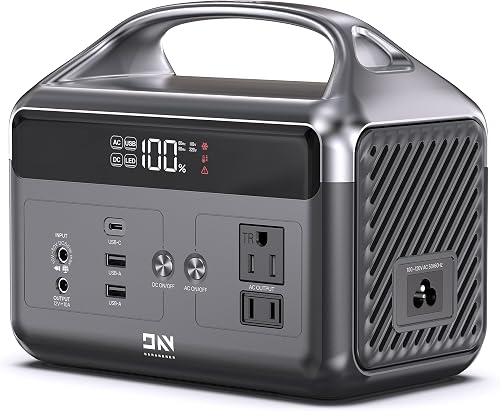
DaranEner Portable Power Station
Best for bedside CPAP backup - 5
 Check it
BLUETTI Elite 30 V2 Portable Power Station
Best for small appliances during a blackout - 6
 Check it
EF ECOFLOW DELTA 3 Max Portable Power
Best for whole-fridge backup - 7
 Check it
EF ECOFLOW Portable Power Station Delta 3
Best for a middle-ground home setup - 8
 Check it
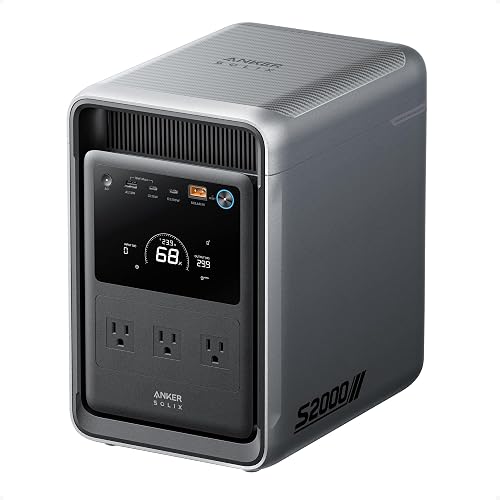
Anker SOLIX S2000 Portable Power Station
Best for long fridge runtime - 9
 Check it
ALLWEI Portable Power Station 300W
Best budget entry point
The best portable power stations for home backup at every capacity
The best pick for you depends on the load you plan to carry. A 300Wh station is a nightstand or desk companion, while a 2kWh model is a fridge backup.
Each station below is the strongest choice for one specific home need.
Jackery Explorer 300 Portable Power Station: Best for light outage coverage
- 292Wh LiFePO4 battery
- 300W output, 600W surge
- 7.5 lb body with handle
- 2 AC, 1 USB-C PD, 2 USB-A and 1 car port
A small, light station that keeps a router, phones and a laptop alive through a short blackout. It recharges from a wall outlet in about 3 hours.
Pros
- Light enough to move room to room
- LiFePO4 cells rated for 4,000 cycles
- Pure sine wave AC outlets
Cons
- 300W cannot run a fridge or microwave
- Solar panel sold separately
The Jackery Explorer 300 is the pick for a first backup station, the one you buy to stop a short outage from feeling like an emergency. At 7.5 lb with a built-in handle, it moves from the desk to the kitchen without strain.
Its 292Wh battery runs a router and a laptop for hours, and the 300W pure sine wave output is gentle enough for sensitive electronics. LiFePO4 cells are rated for 4,000 charge cycles, so the station stays useful for years of occasional use.
Charging is straightforward. A wall outlet fills it in about 3 hours, a car port in about 4 hours, and a 100W Jackery solar panel reaches 80% in roughly 2.8 hours.
The panel is sold separately.
Buy it when you want coverage for lights, Wi-Fi and a laptop without spending big. The 300W ceiling means it cannot start a fridge, so choose a larger station for kitchen appliances.
Jackery Explorer 1000 v2 Portable Power Station: Best for quick recharge between outages
- 1,070Wh LiFePO4 battery
- 1,500W output, 3,000W surge
- 23.8 lb with foldable handle
- App-controlled charging modes
Enough capacity for a fridge plus a few small devices, with a one-hour emergency charge from the wall when the app enables it.
Pros
- 0 to 100% in about 1 hour in emergency mode
- Three AC outlets and 100W USB-C
- Quiet 30 dB overnight charging mode
Cons
- Compatible only with Jackery solar panels
- One-hour charge needs the app each time
The Explorer 1000 v2 is the pick when you want real appliance power without a heavy cabinet. Its 1,500W output and 3,000W surge can carry a fridge or an electric pot, and the 1,070Wh battery gives that load meaningful runtime.
The standout feature is speed. With emergency charging enabled in the Jackery app, it goes from 0 to 100% in about an hour, so you can top it up before a storm arrives.
The default charge takes 1.7 hours to protect battery health.
Three AC ports, two USB-C and one USB-A cover a household's phones and laptops at once. The LFP battery holds over 70% capacity after 4,000 cycles.
Choose it if you want a fridge-capable station that refills fast between outages. One limit to know: it charges only from Jackery solar panels.
Anker SOLIX C1000 Gen 2 Portable Power: Best for UPS protection of home office gear
- 1,024Wh LiFePO4 battery
- 2,000W output, 3,000W peak
- 9 outlets
- Under 10 ms UPS switchover
A 2,000W station with a fast UPS handoff for a desktop, monitor and CPAP machine. The bundle adds a 200W solar panel.
Pros
- 9 ports cover a desk setup
- Under 10 ms UPS switchover
- 600W solar recharge in about 1.8 hours
Cons
- Capacity cannot be expanded
- UltraFast charging depends on battery temperature
The Anker SOLIX C1000 Gen 2 is the pick when your backup plan centers on a home office. Its under 10 ms UPS switchover keeps a desktop, monitor and router from dropping when the grid fails, so a workday does not end at the first flicker.
The 2,000W output and 1,024Wh capacity run nine devices across the station's ports. That is more than enough for a desk setup plus a lamp and a phone charger.
Anker says the unit is 14% smaller and 11% lighter than similar models.
Time-of-Use mode in the Anker app schedules charging for cheaper hours. Solar input up to 600W refills the battery in about 1.8 hours, and the bundle includes a 200W bifacial panel.
Pick it for a desk or a CPAP setup that needs instant backup. Its capacity cannot be expanded, so buy the size you need up front.
For a smaller solar setup, our portable power station for Starlink Mini roundup covers light-duty options.
DaranEner Portable Power Station: Best for bedside CPAP backup
- 192Wh LiFePO4 battery
- 300W output, 600W surge
- 5.7 lb body
- USB-C PD 60W and built-in LED light
The lightest pick here, sized for a phone, a lamp and a CPAP machine on a nightstand. It carries an SOS flashlight for outages after dark.
Pros
- Smallest and lightest station in this group
- Pure sine wave output for sensitive devices
- Built-in LED light with SOS mode
Cons
- 192Wh will not run a CPAP all night for everyone
- 60W solar input is slow to refill
The DaranEner station is the pick for a nightstand. At 5.7 lb and about the size of a toaster, it sits beside a bed without crowding the table, and its pure sine wave output is safe for a CPAP machine.
The 192Wh battery and 300W output handle a phone, a tablet and a small fan at the same time. A built-in LED light with four brightness levels and an SOS mode gives you light during the outage itself.
Its MPPT controller makes the most of a small solar panel, though the 60W DC input means solar refills slowly. AC charging takes about 3.5 to 4 hours.
DaranEner notes that 192Wh may not run a CPAP all night for every user, so check your machine's draw first.
Choose it when portability and bedside size matter more than fridge power. It covers the essentials, not the kitchen.
BLUETTI Elite 30 V2 Portable Power Station: Best for small appliances during a blackout
- 288Wh LiFePO4 battery
- 600W output, 1,500W power lifting
- 9.4 lb body
- Under 10 ms UPS
A compact station that pushes 600W continuously and 1,500W in lifting mode, enough for a small kettle or a fridge's startup draw.
Pros
- 600W continuous is double the small-station norm
- 0 to 80% wall charge in 45 minutes
- 10 ms UPS for routers and laptops
Cons
- 288Wh drains fast under lifting-mode loads
- Lifting mode is not meant for long runs
The BLUETTI Elite 30 V2 is the pick when you want a small station that can still handle a real appliance. Its 600W continuous output is twice what most 300Wh units offer, and Power Lifting mode pushes 1,500W for a short burst.
That means a small kettle, a toaster or a fridge startup draw is within reach. The 288Wh battery keeps the run short under those loads, but it handles the moment.
A 10 ms UPS protects a router or laptop during a switchover.
Wall charging reaches 80% in 45 minutes. BLUETTI's UltraCell design and smart cooling cut standby draw to 4.5W, so the battery holds its charge longer between uses.
The app adds Bluetooth and Wi-Fi control.
Buy it for a compact station with appliance-grade output. For longer appliance runs, move up to a 1kWh model.
Our guide to how many batteries for 3000w inverter explains the capacity math for bigger loads.
EF ECOFLOW DELTA 3 Max Portable Power: Best for whole-fridge backup
- 2,048Wh LiFePO4 battery
- 2,400W output, 3,400W X-Boost
- 10 ms transfer time
- 5-year service
A large-capacity station that runs a full fridge and more through a long outage. X-Boost handles high-draw appliances without tripping.
Pros
- 2,048Wh covers a fridge for many hours
- 0 to 80% wall charge in 1.13 hours
- Quiet operation for overnight backup
Cons
- Heavy to move once placed
- Large footprint needs dedicated floor space
The EcoFlow DELTA 3 Max is the pick for a whole-fridge backup. Its 2,048Wh LFP battery and 2,400W output keep a fridge and a few small devices running through a long outage, and X-Boost pushes 3,400W for high-draw appliances.
The station charges from 0 to 80% in 1.13 hours on the wall, which makes it practical to refill between storms. Under 10 ms transfer time protects computers and medical devices, and EcoFlow says the unit runs quietly enough for overnight use.
The lighter build helps when moving it from the garage to the kitchen, though 2kWh of battery is still a two-hand lift. A 5-year service period covers the unit.
Choose it when you plan to carry the whole kitchen, not just the router. Its size and weight suit a fixed backup spot more than a camping trip.
EF ECOFLOW Portable Power Station Delta 3: Best for a middle-ground home setup
- 1,024Wh LiFePO4 battery
- 1,800W output, 3,600W surge
- 26.7 lb body
- Under 10 ms UPS
A 1,800W station with enough headroom for a fridge or a microwave and a fast 45-minute charge to 80%.
Pros
- 1,800W runs most kitchen appliances
- 0 to 80% in 45 minutes
- Storm Alert and Self-Powered modes in the app
Cons
- Not compatible with DELTA 2 or DELTA 3 extra batteries
- Heavier than the smaller 1kWh picks
The EcoFlow DELTA 3 Classic is the middle pick between a desk station and a fridge unit. Its 1,024Wh battery and 1,800W output run a fridge, a microwave or a space heater's electronics, while the 3,600W surge covers motor starts.
The 45-minute charge to 80% is the fastest in this group at this capacity. Under 10 ms UPS protects sensitive gear, and the app adds Storm Alert, which prepares the station when severe weather is forecast.
One limit matters if you already own EcoFlow batteries: this model does not work with DELTA 2 or DELTA 3 series extra batteries. It is a standalone unit.
Pick it for a balanced home setup at a moderate weight. It is easier to move than the 2kWh models but carries more than the 1kWh desk picks.
Our RV converter charger roundup covers the 12V side if you also plan a camper setup.
Anker SOLIX S2000 Portable Power Station: Best for long fridge runtime
- 2,010Wh LiFePO4 battery
- 1,500W output, 3,000W peak
- 35.7 lb body
- 8 outlets
A 2kWh station built around fridge backup, with a low idle draw and a 10,000-cycle LFP battery.
Pros
- Anker says 35 hours of fridge runtime
- 10,000 charge cycles
- 6 ways to recharge including AC plus solar
Cons
- No 12V DC port
- App needed to change settings or update firmware
The Anker SOLIX S2000 is the pick for the longest fridge runtime per watt-hour. Its 2,010Wh LFP battery with 10,000 charge cycles is rated to last 15 years of daily use, and Anker says a 700 L fridge runs about 35 hours on a charge.
The unit draws just 6W at idle and is 10% more efficient than other 2kWh systems, according to Anker. That low draw is what turns capacity into hours when the fridge cycles on and off.
Eight outlets sit on the front and rear. Anker lists six ways to recharge, including AC plus solar, a generator and an alternator charger.
Under 10 ms UPS protects a home office setup.
Buy it when the fridge is the priority and you want the longest possible run. It has no 12V DC port, and changing settings or updating firmware needs the Anker app.
For a camper build, our 3000 watt inverter for RV guide covers the DC-to-AC side.
ALLWEI Portable Power Station 300W: Best budget entry point
- 256Wh LiFePO4 battery
- 300W output, 600W peak
- 6.4 lb body
- USB-C PD 60W
A low-cost station for phones, a fan and a small lamp during a short outage. Dual AC plus solar charging refills it in about 2 to 2.5 hours.
Pros
- 256Wh at a budget tier
- AC plus solar dual charging
- Pure sine wave output
Cons
- Only one AC outlet
- 300W limits it to small devices
The ALLWEI 300W is the budget pick for a first station. Its 256Wh LFP battery and 300W output cover a phone, a fan, a lamp and a laptop during a short outage, and the 6.4 lb body stores in a closet.
Dual charging is its practical advantage. AC plus solar together refill the station in about 2 to 2.5 hours, which matters when a storm is hours away.
AC alone takes about 3.5 to 4 hours.
The LiFePO4 cells are rated for 3,000 cycles, and ALLWEI provides a 5-year warranty. A 3-level LED light with SOS mode helps during a night outage.
The single AC outlet is the limit: one appliance at a time on AC power.
Choose it when cost matters and your backup needs are light. It is a good first station, not a fridge solution.
How the portable power stations for home backup compare
Capacity and output are the two numbers that decide what a station can do. A station with high output but low capacity runs an appliance briefly, while a high-capacity unit with modest output runs small loads for a long time.
The comparison table lines up the nine picks on the specs that matter for outage planning. Compare the output figure first, then the capacity, then the weight if you plan to move the station around.
| Product | Best for | Capacity | Output | Weight | Our score |
|---|---|---|---|---|---|
| Jackery Explorer 300 Portable Power Station | light outage coverage | 292Wh | 300W, 600W surge | 7.5 lb | 9.7 |
| Jackery Explorer 1000 v2 Portable Power Station | quick recharge between outages | 1,070Wh | 1,500W, 3,000W surge | 23.8 lb | 9.6 |
| Anker SOLIX C1000 Gen 2 Portable Power | UPS protection of home office gear | 1,024Wh | 2,000W, 3,000W peak | About 11% lighter than similar models | 9.6 |
| DaranEner Portable Power Station | bedside CPAP backup | 192Wh | 300W, 600W surge | 5.7 lb | 9.5 |
| BLUETTI Elite 30 V2 Portable Power Station | small appliances during a blackout | 288Wh | 600W, 1,500W lifting | 9.4 lb | 9.4 |
| EF ECOFLOW DELTA 3 Max Portable Power | whole-fridge backup | 2,048Wh | 2,400W, 3,400W X-Boost | 9.1 | |
| EF ECOFLOW Portable Power Station Delta 3 | a middle-ground home setup | 1,024Wh | 1,800W, 3,600W surge | 26.7 lb | 9.1 |
| Anker SOLIX S2000 Portable Power Station | long fridge runtime | 2,010Wh | 1,500W, 3,000W peak | 35.7 lb | 9.1 |
| ALLWEI Portable Power Station 300W | budget entry point | 256Wh | 300W, 600W peak | 6.4 lb | 8.6 |
How we compared these home backup stations
We compared these stations on the specs that decide an outage plan: usable capacity in watt-hours, continuous output, surge rating, UPS switchover time and weight. A station only makes the list if its output can carry a defined set of home devices.
We also weighed the battery chemistry and cycle rating. All nine picks use LiFePO4 cells, which last longer than the older lithium-ion type and hold capacity better over years of occasional use.
A 4,000-cycle rating means daily charging for more than a decade.
Our score weighs specs, features and buyer feedback against what you're shopping for. A station earns a high score when its capacity, output and portability line up with a real backup job, not just when its numbers look large.
Recharge speed counts too. An outage plan only works if the station can refill between events, so wall-charge time and solar input were part of every score.
What size portable power station do you need for home backup?
Start with the load you want to carry and the hours you want it to run. Multiply watts by hours to get watt-hours, then add a margin of about 15% for inverter losses.
That total is your capacity target.
Stations for lights, Wi-Fi and phones
A 250 to 300Wh station covers the essentials in a short outage. The Jackery Explorer 300, DaranEner and ALLWEI all sit in this range, and each one runs a router, phones and a laptop for hours.
Pick this size when your outages are short or you rent and cannot add wiring.
Stations for a fridge and kitchen appliances
Plan for 1,000Wh and at least 1,500W of output. The Jackery Explorer 1000 v2, Anker SOLIX C1000 Gen 2 and EcoFlow DELTA 3 Classic fit this tier.
Check the fridge's running watts and its startup surge before you buy.
Stations for a whole-home essentials plan
Two kilowatt-hours and up carries a fridge for most of a day plus a few small devices. The Anker SOLIX S2000 and EcoFlow DELTA 3 Max sit here.
These units are heavy, so choose a spot near the fridge and leave them plugged in as a UPS.
Do you need UPS mode in a home backup station?
Yes, if you plan to keep a desktop, a router or a CPAP machine running through the switchover. A station without UPS switches on when you press a button, so your gear loses power and restarts.
A UPS model hands over in milliseconds.
What the switchover time means in practice
Under 10 ms is fast enough that most electronics never notice the change. A desktop stays on, a router keeps its connection and a CPAP machine keeps blowing.
Anything slower may cause a reboot.
The Anker SOLIX C1000 Gen 2, BLUETTI Elite 30 V2, EcoFlow DELTA 3 Classic and both EcoFlow and Anker 2kWh models list under 10 ms. The Jackery Explorer 300 and ALLWEI are best used as plain power sources rather than as plugged-in backup.
When a plain station is enough
If your plan is to wheel out a station when the lights go out, you do not need UPS. You plug your gear in after the outage starts.
The Jackery Explorer 300 and ALLWEI work this way and cost less for it.
How long will a portable power station run your essentials?
Divide the station's capacity in watt-hours by your load in watts, then take about 85% of that figure. The discount covers inverter losses and the station's own idle draw.
A 1,024Wh station running a 200W load gives roughly 4.3 hours.
Run times for common home loads
A router and a phone charger draw about 20W to 30W together, so a 300Wh station runs them for more than 8 hours. A laptop at 60W gets about 4 hours from the same capacity.
A full-size fridge cycles between high and low draw. Anker's 35-hour estimate for the S2000 assumes a specific 700 L fridge in a controlled room, so treat it as a best case.
Your fridge model, room temperature and how often the door opens all cut into that number.
Why the estimate is not a promise
Battery capacity fades with age, and cold rooms reduce usable energy. A station kept in a garage in winter delivers less than one kept indoors.
Keep the station in a heated room and recharge it every few months to hold capacity.
Can solar panels keep a home backup station charged during an outage?
Yes, if the panels match the station's solar input and the sun cooperates. Solar adds days to a long outage, but it will not carry a fridge through a cloudy week.
Treat solar as a top-up, not the main plan.
Solar input and panel matching
Check the station's maximum solar wattage and voltage before buying a panel. The Anker SOLIX C1000 Gen 2 accepts up to 600W and refills in about 1.8 hours.
The Jackery Explorer 300 reaches 80% in about 2.8 hours on a 100W panel. The DaranEner takes only 60W, so solar is slow.
Panel voltage matters. The DaranEner wants a panel with a VOC around 18V to 35V.
Mismatched voltage wastes input or fails to charge at all. A 100W folding panel is the practical size for the small stations here.
What to expect on a cloudy day
Output drops to a fraction of the panel's rating under cloud, and none at night. A 100W panel on a gray day might deliver 20W to 30W.
Size your solar plan for the worst day you expect, not the best.
Which home backup station fits your situation?
A renter in an apartment and a homeowner with a garage fridge need different stations. Use this list to match the pick to your home.
For an apartment with short outages
Pick the Jackery Explorer 300 or the ALLWEI. Both are light, store in a closet and cover Wi-Fi, lights and a laptop.
A 300W station cannot run an electric heater or a full kitchen, so plan around those limits.
For a house with a fridge to protect
Choose the Anker SOLIX S2000 or EcoFlow DELTA 3 Max for the longest fridge runs. The Jackery Explorer 1000 v2 and EcoFlow DELTA 3 Classic are lighter alternatives if you only need a few hours of fridge coverage.
For medical devices and a home office
The Anker SOLIX C1000 Gen 2 and BLUETTI Elite 30 V2 are the picks when a CPAP machine or a desktop cannot lose power. Both offer under 10 ms UPS handoff, and the Anker has more outlets for a desk setup.
If you also plan a camper build, see our 3000 watt inverter for RV roundup.
The verdict on the best portable power station for home backup
The best portable power station for home backup is the Jackery Explorer 300 Portable Power Station for most homes, because it covers the essentials at a weight you can actually move. It is the right first buy for an apartment or a short outage.
For a fridge, move up to the Anker SOLIX S2000 for the longest runtime or the EcoFlow DELTA 3 Max for more appliance headroom. For a desk or CPAP setup, the Anker SOLIX C1000 Gen 2 has the fastest UPS handoff and the most outlets.
Buy the smallest station that carries your real load. Extra capacity you never use is just extra weight to move when the lights go out.
Our top 3 picks at a glance
-
1
Best for light outage coverage
Jackery Explorer 300 Portable Power Station
9.7/10 our score
See it on Amazon -
2
Best for quick recharge between outages
Jackery Explorer 1000 v2 Portable Power Station
9.6/10 our score
See it on Amazon -
3
Best for UPS protection of home office gear
Anker SOLIX C1000 Gen 2 Portable Power
9.6/10 our score
See it on Amazon
Frequently asked questions
Can a portable power station run a refrigerator?
Yes, if its continuous output exceeds the fridge's running watts and its surge rating covers the compressor start. A 1,500W station with a 3,000W surge handles most full-size fridges.
Small 300W stations cannot.
How long will a power station keep my essentials running?
Divide capacity in watt-hours by the load in watts, then allow for inverter losses. A 1,024Wh station running a 100W load gives roughly 8 to 9 hours.
Real time drops with higher loads, colder rooms and idle draw.
What does UPS mode mean on a portable power station?
UPS mode keeps the station plugged into the wall while it passes power through to your devices. When the grid drops, it switches to battery in milliseconds.
Under 10 ms switchover keeps a desktop or CPAP machine from restarting.
Can I charge a portable power station with solar panels during an outage?
Yes, if the panels match the station's solar input. Most stations accept 100W to 600W of solar, and recharge time depends on sun and panel wattage.
A panel is sold separately on nearly every model here.
Is a portable power station safe to use indoors during a blackout?
Yes. These stations run on lithium batteries and produce no exhaust, so they are safe indoors.
Place them on a hard surface with room for venting, and keep them away from damp floors and extreme heat.


