Can You Run an RV Air Conditioner on Battery Power?
Yes, you can run an RV air conditioner on battery power if the battery bank, inverter, and wiring can handle its startup and running loads. Runtime depends on the air conditioner's draw and the usable energy in your battery bank.
On this page (8 sections)
- What does an RV air conditioner need from a battery system?
- Can a battery run an RV AC for a full night?
- How do you estimate battery runtime?
- What size inverter can start an RV air conditioner?
- Can a soft start help an RV AC run on batteries?
- Can solar recharge the batteries while the AC runs?
- What limits an RV air conditioner battery setup?
- Is running an RV AC on battery power worth it?
Yes, you can run an RV air conditioner on battery power with a battery bank and inverter sized for both compressor startup and steady operation. The system also needs enough usable energy and a way to recharge it.
For many RVs, the hard part is not getting 120V power from an inverter. It's supplying the AC's startup surge and keeping enough energy available for the hours you want to cool.
What does an RV air conditioner need from a battery system?
An RV air conditioner needs 120V AC from an inverter, while the batteries supply DC power. The inverter must handle the compressor's startup demand as well as its normal running load.
Check the air conditioner's label or manual for its electrical draw. Also check the inverter's continuous rating, surge rating, and compatibility with the battery bank's voltage.
Your system has three linked limits: battery energy sets runtime, inverter power sets what can start and run, and charging capacity sets how soon you can use it again. A weakness in any one of these can stop the AC or shorten a cooling session.
For background on battery capacity, see what size lithium battery your RV needs. The right size depends on your planned loads, not just the air conditioner.
Can a battery run an RV AC for a full night?
It can, but only if the bank has enough usable energy for the AC's draw over the full night. The exact runtime depends on the air conditioner, thermostat cycling, outside conditions, inverter efficiency, and other loads.
Use this rough estimate:
Runtime in hours = usable battery watt-hours ÷ AC watts
This is a starting point, not a guarantee. Add inverter losses and reserve, and account for loads such as a fridge, lights, fans, or electronics.
A 12.8V, 100Ah battery has about 1,280Wh of nominal energy. That doesn't mean all 1,280Wh reaches the air conditioner: the usable amount depends on the battery's limits and conversion losses.
The SUPER EMPOWER battery is designed for energy storage, including RV house power, and has a built-in 100A BMS. One battery's capacity may be too limited for extended AC use, so calculate the whole bank before buying.
The battery's charging is disabled below 32°F, and discharge stops at –4°F. Those limits matter if you camp in cold conditions or expect to charge outdoors.
How do you estimate battery runtime?
Start with the air conditioner's watts and the hours you want to run it. Multiply those figures to estimate energy use, then compare that total with the battery bank's usable watt-hours.
For example, if an AC draws 1,200W while running, one hour at that draw uses about 1,200Wh before inverter losses. The actual draw and cycling vary, so use your AC's own electrical information where available.
A useful planning sequence is:
- Find the air conditioner's running draw and startup requirements.
- Multiply its running watts by the hours you want to run it.
- Add energy for inverter losses and other appliances.
- Compare the result with usable battery capacity, keeping a reserve.
- Confirm the inverter and wiring can support the required current.
A 12V system draws high current to make household AC power. At 1,200W, the DC draw is already around 100A before losses, so battery limits, cable size, fuses, and installation matter.
For more on battery counts at a given inverter size, read how many batteries a 3000W inverter needs. You can also compare inverter sizes for an RV before choosing one.
What size inverter can start an RV air conditioner?
Choose an inverter with enough continuous output for the running load and enough surge capacity for startup. A high continuous rating alone doesn't confirm that the compressor will start.
The BELTTT inverter is a 12V pure sine wave model with 3,000W continuous output and 6,000W peak surge power. It includes an LCD display and multiple protection features.
Those ratings make it a candidate to compare against an AC's requirements, but they don't guarantee compatibility with a particular RV air conditioner. Check the AC's startup demand, the battery bank's maximum output, and the RV's wiring plan.
The inverter also needs a suitable installation location and adequate battery cables. Follow its instructions and consult a qualified RV electrician if you're unsure about high-current DC wiring.
Can a soft start help an RV AC run on batteries?
A soft start may reduce the compressor's startup demand, but it doesn't increase battery capacity or inverter output. It can help when startup surge is the main obstacle, provided the unit fits the air conditioner.
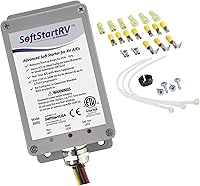
SoftStartRV says its unit can help an AC start on a small generator or 15A supply, and that it can support certain two-AC, 30A setups. Those claims don't mean every battery and inverter combination will work.
Check compatibility with your specific AC and have the installation done according to the manufacturer's instructions. A soft start is not a substitute for checking the inverter's surge rating and the battery bank's discharge limit.
See what an RV AC soft start does for more on how it changes compressor startup.
Can solar recharge the batteries while the AC runs?
Solar can extend battery use when its output is enough to cover part of the AC load and recharge the bank. Output changes with sunlight, panel angle, shade, and weather, so don't plan on a fixed amount all day.
If the AC uses more power than the panels provide, the battery continues to drain, just more slowly. If solar output exceeds the load, the extra power can help recharge the bank, subject to the charge controller and battery's limits.
Think about how you'll charge when solar is weak or unavailable. A generator, shore power, or a vehicle charging system may be part of the plan, but each needs compatible equipment and safe connections.
What limits an RV air conditioner battery setup?
The battery's discharge limit, the inverter's surge rating, and the AC's actual load set the main limits. Heat, other appliances, and charging conditions affect how long the system can keep up.
A 12V inverter can draw substantial current from the batteries. Confirm that the battery BMS, cables, connections, fuses, and inverter are suitable for the current the system will draw.
Don't run an AC through an inverter that is undersized or wired outside its instructions. If the inverter shuts down, the batteries heat up, or wiring smells hot, stop using the system and get qualified help.
Is running an RV AC on battery power worth it?
Battery-powered AC makes sense when you need cooling away from hookups and can support the battery, inverter, and charging requirements. For occasional use, compare the cost and weight of a larger battery system with the option of a generator or campground power.
Choose the battery bank based on your target runtime and other loads. Choose an inverter based on the AC's startup and running requirements, then consider a soft start if startup demand is the sticking point.
For battery sizing, start with what size lithium battery your RV needs. For the AC startup side, review RV air conditioner soft starts before finalizing your setup.
Frequently asked questions
Can you run an RV AC on one 100Ah battery?
Usually, one 100Ah battery offers limited air conditioner runtime, and it may not support the startup load through your inverter. Check the battery's usable energy, inverter limits, AC running draw, and startup demand before trying it.
A 12.8V 100Ah battery stores about 1.28 kWh nominally, before inverter losses and reserve.
How many batteries do I need to run an RV air conditioner?
There isn't one battery count that fits every RV air conditioner. Estimate its watt-hours per hour, divide by the usable energy per battery, and allow for inverter losses and a reserve.
Then confirm the inverter and battery bank can handle compressor startup, and consider how you'll recharge the bank.
Will a soft start let an RV AC run from batteries?
A soft start can reduce the compressor's startup demand, which may make an inverter-based setup easier to size. It doesn't provide energy or guarantee that a battery and inverter can run the air conditioner.
Check the soft start's fit and installation requirements, then compare the AC load with your system limits.
Can solar keep an RV air conditioner running all day?
Solar can help recharge an RV battery bank, but whether it can keep an air conditioner running depends on the AC's energy use, panel output, sun, shading, and other loads. Size the battery for periods with little sun, and include the inverter's losses and your charging needs in the plan.