What Size Inverter Do You Need for Your RV?
Choose an RV inverter by adding the running watts of the devices you’ll use at the same time, then check that it can handle their startup surge. A 1,500W to 2,000W inverter suits modest loads; larger combined loads may need 3,000W or more.
On this page (8 sections)
- What size inverter do you need for an RV?
- How do you calculate the inverter watts you need?
- Why do startup watts matter?
- How do batteries and cables affect inverter size?
- Can an RV inverter run an air conditioner?
- Should you choose a pure sine wave inverter?
- Does a transfer switch change the inverter size you need?
- Which inverter size fits your RV plans?
Choose an RV inverter by adding the running watts of the devices you’ll use at the same time, then check that it can handle their startup surge. A 1,500W to 2,000W inverter suits modest loads; larger combined loads may need 3,000W or more.
The right size depends on what you want to power, not the RV’s length or the number of outlets. Your battery bank, cables, and installation also need to support the load.
What size inverter do you need for an RV?
Choose an inverter whose continuous rating is higher than your planned combined running load. Then check that its surge rating can handle any motor or compressor starting while other devices are on.
For example, if you plan to run a 700W appliance and a 200W device at the same time, the combined running load is 900W. An inverter rated at 1,000W continuous would leave little headroom; also check whether either device needs extra power to start.
A 1,500W inverter may fit a smaller set of electronics and everyday loads. A 2,000W or 3,000W model gives more capacity, but only helps if the batteries and DC wiring can supply the power.
How do you calculate the inverter watts you need?
Add the running watts of everything you expect to power at once. Use appliance labels or manuals, and include chargers and other small loads instead of estimating the whole RV as one device.
- List the appliances you may run together.
- Record each appliance’s running watts.
- Add those watts for the continuous load.
- Check each motor or compressor’s startup watts.
- Compare both totals with the inverter’s continuous and surge ratings.
If an appliance gives amps rather than watts, multiply amps by volts to estimate watts. For a 120V appliance, 5A is about 600W; use the appliance’s own wattage figures when available.
Don’t add every appliance in the RV if you won’t run them at once. Make a realistic list for the way you camp, then leave some room for small loads you might forget.
Why do startup watts matter?
Motors and compressors can need more power to start than they use while running. Your inverter’s surge rating must cover that brief demand without exceeding its limit.
An air conditioner, refrigerator, or power tool may have a startup surge. Check the appliance manual or manufacturer information for its starting requirement; if it isn’t available, don’t assume a large inverter will handle it.
The surge rating is not a second continuous rating. A 2,000W inverter with a higher peak rating still should not carry a continuous load above 2,000W.
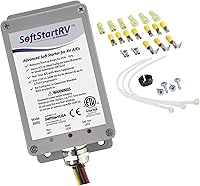
A soft start can reduce startup demand for some RV air conditioners. See what a soft start for RV AC does and check the air conditioner and soft-start instructions for compatibility.
How do batteries and cables affect inverter size?
The battery bank and DC wiring must safely support the inverter’s demand. A high-wattage inverter can draw substantial current from a 12V battery, especially near its full output.
As a rough illustration, 1,500W divided by 12V is 125A before conversion losses. Actual current depends on battery voltage, inverter efficiency, and load, so use the inverter manual and battery specifications to plan cables, fuses, and runtime.
A larger inverter won’t create more stored energy. It can power a larger load for a shorter time if the battery capacity and discharge limits allow it.
Estimate how long you want to run each device and add its energy use in watt-hours. Our guide to how many batteries a 3000W inverter needs explains why inverter wattage alone can’t determine battery count.
The BELTTT inverter is a 12V pure sine wave model with an LCD and dual AC outlets. Its 2,000W continuous and 4,000W peak ratings can help you assess whether this size fits your planned loads.
The LANDERPOW inverter is a 12V pure sine wave model with three AC outlets, a hardwire terminal, and a remote. Consider its 3,000W continuous rating only after checking battery capacity, cable requirements, and appliance startup demand.
Can an RV inverter run an air conditioner?
Only if the inverter, battery bank, wiring, and air conditioner can all handle its running and startup demand. Check the air conditioner’s exact requirements before choosing an inverter size.
Air conditioning can draw a large load for an extended period. Even when an inverter can start the unit, the battery may not have enough capacity to run it for the time you want.
A soft start may help with the initial surge on compatible air conditioners, but it doesn’t reduce the steady power needed to keep the unit running. For the battery side of that decision, read whether you can run RV AC on battery power.
Should you choose a pure sine wave inverter?
A pure sine wave inverter is a practical option for sensitive electronics and appliances with motors. Check the instructions for each device, since the required waveform depends on the appliance.
A pure sine wave output is closer to utility power than a modified sine wave output. If you’re comparing waveform types, see pure sine wave vs. modified sine wave inverters for RVs.
Waveform doesn’t determine inverter size. You still need to match continuous watts and startup surge, then confirm the battery and wiring can supply the load.
Does a transfer switch change the inverter size you need?
No, a transfer switch changes how AC power is selected, not how many watts the inverter can supply. Size the inverter for your loads and check how the unit handles shore power.
The OLTEANP is a 1,500W continuous pure sine wave inverter with a 3,000W peak rating and a built-in transfer switch. It switches to shore power when available and to battery-powered output if shore power is interrupted.
This option can suit a modest load where automatic shore-to-battery switching is useful. It doesn’t recharge the connected battery, so you’ll need a separate charging setup.
Which inverter size fits your RV plans?
Choose by your highest likely simultaneous load, startup surge, and battery capacity. A modest electronics setup may fit a 1,500W inverter; a broader load may call for 2,000W or 3,000W if the rest of the system supports it.
Pick the OLTEANP if a 1,500W continuous limit fits your devices and you want its transfer switch. Consider the BELTTT for a 2,000W continuous load, or the LANDERPOW for up to 3,000W continuous demand, after checking battery and wiring limits.
Before buying, total your running watts, identify startup loads, and estimate runtime. Then compare the battery bank and cable plan with the inverter manual, and use how much solar an RV needs to plan recharging for off-grid use.
Frequently asked questions
What size inverter do I need for an RV?
Size an RV inverter for the combined running watts of the appliances you expect to use at once, with room for the largest startup surge. A 1,500W or 2,000W unit can suit modest loads, while higher combined demand may call for 3,000W or more.
Check battery capacity, wiring, and appliance limits too.
Can a 2,000W inverter run an RV air conditioner?
It depends on the air conditioner's running and startup wattage, plus what else is drawing power. Compare both figures with the inverter's continuous and surge ratings, and account for battery and cable limits.
A soft start may reduce startup demand on some units, but it doesn't increase the inverter's continuous rating.
How many batteries do I need for an RV inverter?
Battery needs depend on inverter power, battery voltage and capacity, the load, and how long you want to run it. A larger inverter can draw more current from a 12V battery bank, especially at high output.
Estimate energy use in watt-hours, then check the battery maker's discharge limits and inverter instructions.
Do I need a pure sine wave inverter for an RV?
A pure sine wave inverter is a suitable choice for sensitive electronics and many motor or compressor loads. Check the appliance manual for its power and waveform needs before choosing.
Also compare the inverter's continuous and surge output with the appliance's running and startup wattage.