How Long Is RV Surge Protectors Good For?
An RV surge protector is good for years of routine use, not months, but its surge capacity runs out each time it absorbs a hit. Judge it by two clocks: the electronics and housing, which typically serve 5 to 10 years, and the joule rating, which a strong spike can burn through in a season.
On this page (9 sections)
- What are you actually asking when you ask how long RV surge protectors last?
- How long should an RV surge protector last in normal use?
- Which parts age fastest, and which ones fail first?
- How many surges can a unit absorb before it's spent?
- What signs mean your surge protector's surge life is used up?
- How long is each pick great for, and which one fits your rig?
- Why do some RV surge protectors die in a season?
- When should you replace rather than keep using it?
- What's the takeaway on how long RV surge protectors are good for?
How long is RV surge protectors good for? Plan on several years of useful service, but treat the surge capacity as a separate budget.
The electronics and housing age slowly, while the surge absorbing parts use up a little of their total every time they clamp a spike.
That second clock matters more than the first. A protector that has survived two hard summers is not the same device it was on day one, even if it still passes power.
What are you actually asking when you ask how long RV surge protectors last?
You are asking two questions at once: how long the unit survives and how many surges it can take. Split them and the answer gets clearer.
The body, plugs and circuit board are built to keep working for years. The RV versions pair that long-lived hardware with tougher shells and better fault detection.
The absorbing section is different. It gives up a slice of its rating with each event.
A 1,790-joule unit has more room to spend down than an 825-joule unit, which is the main reason we treat those two designs as different classes.
So when you ask how long is RV surge protectors good for, the honest answer starts with which clock you mean. Age alone tells you little.
How long should an RV surge protector last in normal use?
Expect roughly 5 to 10 years from the electronics and housing if you store it dry and don't drag it over pavement. That range reflects how RV electrical gear usually ages, not a warranty promise.
Power conditioners with built-in electrical management do more than a plain strip. They monitor voltage and open neutrals, so the board carries more circuits and more heat.
The trade is more protection for the same years.
Portable units see more handling than hardwired ones. Pulling the plug out by the cord, letting it swing from the pedestal, and stuffing it wet into a bin all shorten the odds.
A hardwired RV surge protector that stays mounted and out of the weather tends to see the gentlest life of all, since nobody unplugs it on a rainy morning.
Which parts age fastest, and which ones fail first?
The surge absorbing parts and the cord ends fail before the circuit board does. That order holds for most owners because those parts take the abuse.
The absorbing section sits where the spikes land, so it collects the damage. Cord and plug contacts bend and oxidize.
The display and buttons are next in line, usually from water and grit rather than electrical wear.
The board itself often outlives the rest. That is why a unit can pass voltage and still be near the end of its surge life, which is a confusing state for anyone watching only whether power flows.
For those parts specifically, dig into what does an RV surge protector do, which covers the absorbing section and the faults it checks.
How many surges can a unit absorb before it's spent?
There's no fixed count. Each event spends a piece of the joule rating.
A small sag costs almost nothing; a direct lightning strike on the park feed can use a large share in one shot.
That 1,790-joule figure on the EMS-PT30X is total capacity, not a per-event limit. Progressive Industries also rates the burst it can pass at 44,000 amps, so it can take a serious hit without failing.
The 825-joule SSP-30XL has less room to spend, while the Power Watchdog's 6,100 joules buy noticeably more headroom for a big 50 amp setup.
The practical lesson: a big park with frequent storms can spend a protector down in a season or two, and a quiet rural spot might see almost no spending in a decade.
What signs mean your surge protector's surge life is used up?
A surge failure code or a light that stays in the wrong state is the clearest sign. The unit is telling you the absorbing section can no longer do its job.
On the EMS-PT30X the display shows error codes and electrical status, and surge failure is one of the faults it reports. The SSP-30XL uses three-color LEDs for the same job.
Both are built to make a spent protector visible.
On the Power Watchdog, the Bluetooth app and the LED park power diagnostics carry that message, along with alerts for unsafe park power.
If the display is dark or the LEDs don't respond at all, the unit may have failed for a different reason: water intrusion, a dropped case or a worn cord. Treat a dead display the same way you treat a surge failure.
How long is each pick great for, and which one fits your rig?
Each pick here is good for progressively different jobs. The EMS-PT30X is the best overall 30 amp choice, the Power Watchdog the best 50 amp with app monitoring, and the SSP-30XL the best budget 30 amp unit.
Progressive Industries EMS-PT30X (30 Amp): best overall
This is the one we would put on the front of a 30 amp trailer first. Its 1,790-joule rating and 44,000 amp spike figure give it more surge headroom than the budget pick, and the fault list covers over and under voltage, open ground and neutral, reverse polarity, miswired pedestals, accidental 240 V, surge failure and AC frequency.
The all-weather shield and Lexan housing take the pedestal life, and the integrated display stays readable in low light. Progressive Industries builds it in the USA and includes a locking bracket.
Spend the extra if your trips include older parks with odd pedestals. Skip it only if you run 50 amp service.
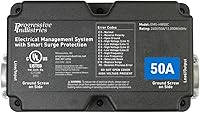
Power Watchdog PWD50EPO (50 Amp, Bluetooth): best for 50 amp rigs
Rigs on 50 amp service get the most surge capacity here. Its 6,100 joules are more than three times the EMS-PT30X, and the 90-second power-on delay holds appliances back until park power settles after a fault.
The Bluetooth app shows voltage, amperage and wattage in real time. Its replaceable surge module is the standout point for this article: when a surge spends the absorbing section, you swap the module instead of the unit.
That design directly stretches how long the product stays good. Read RV ems surge protector picks for alternatives on the same duty.
Progressive Industries SSP-30XL (30 Amp): best budget 30 amp
The SSP-30XL covers 30 amp rigs for far less outlay. Its 825 joules and 22,500 amp spike rating are a smaller surge budget, and it warns on over and under voltage, open ground and neutral, reverse polarity, surge failure and AC frequency.
The three-color LEDs and all-weather shield keep it field-friendly. It lacks the electrical management of the EMS-PT30X, so the main trip hazards are still on you.
Buy it if you camp a few weekends a year and want a cheap layer. The camco rv surge protector range is another budget route.
Why do some RV surge protectors die in a season?
Repeated hard spikes and abused cords kill protectors early. Both causes show up in the same two ways: the surge section spends down, and the connections wear.
If a pedestal shows damage, scorch marks or a loose fit, do not plug in. Finding a tech or moving site beats feeding your unit a fault.
Store the cord coiled loosely and the unit dry. A soaked protector that dries on the bench may still work, but the contacts behind the plug can start to corrode.
Age in storage also counts. A unit that sat in a hot bin for years at a time has seen more heat than one kept indoors, and heat is the other main aging factor.
When should you replace rather than keep using it?
Replace when the unit reports a surge failure, when the display or lights stop working, or when the plugs and cord show damage. Those are the three clear triggers.
If your model has a replaceable surge module, changing the module is the fix, and the rest of the unit keeps going. The Power Watchdog is designed this way, which is a reason to prefer it if you want a long-lived 50 amp setup.
For a unit without a replaceable module, a surge failure means the whole thing goes. That is not a reason to skip the protection; it is a reason to keep the receipt and buy from a maker with clear status signals.
Also replace when the housing is cracked or the plug pins are pitted. A damaged contact can arc, and an arc is worse than the surge you were guarding against.
What's the takeaway on how long RV surge protectors are good for?
The short of it: expect years of service from a well-kept unit, and judge its surge life by its status signals, not its age. Plan on 5 to 10 years for the electronics, and replace the module or the unit the moment it tells you the surge section is spent.
Pick the EMS-PT30X for a 30 amp rig that wants full electrical management. Choose the Power Watchdog if you run 50 amp and value the replaceable module and app.
Take the SSP-30XL for a low-cost layer on a 30 amp setup with modest use.
Whatever you choose, check the status display at every hookup, keep the cords off the ground, and store the unit dry. Those three habits stretch the useful life more than any rating on the box.
Frequently asked questions
Can an RV surge protector go bad without any visible damage?
Yes. The surge absorbing parts can wear out while the case and plugs look fine, so the failure shows up as a unit that no longer absorbs or warns.
Many units have a status code or indicator for this, which is why a quick check at each hookup helps.
Do I replace the whole unit after a big surge?
Not always. With a hardwired or portable EMS that has a replaceable surge module, the module is the part that absorbs the hit and can be swapped.
On models without one, a blown surge section means the whole unit goes.
Does a surge protector last longer in an RV park with stable power?
Often yes, because fewer spikes means less wear on the absorbing parts. The electronics can still age over the same years, so a stable park is a reason for confidence, not a reason to stop checking the unit.