Hardwired vs Portable RV Surge Protector: Which Is Better? (October 2026)
Choose a hardwired RV surge protector for built-in protection, or a portable unit for easy transfer between RVs. Your installation preference, theft concerns and monitoring needs help decide which style fits.
On this page (7 sections)
- Hardwired vs portable RV surge protector: what is the main difference?
- Which style is easier to set up at a campsite?
- Does a portable protector need extra theft protection?
- Which offers more fault protection?
- Do hardwired or portable units make monitoring easier?
- What should you check before buying a 50 amp protector?
- Which hardwired or portable RV surge protector should you choose?
Choose a hardwired RV surge protector for built-in protection, or a portable one if you want to carry it between campsites or RVs. The hard wired or portable RV surge protector choice depends on how you connect at camp, whether you want permanent installation and how you prefer to check electrical status.
Both styles can provide protection, but they put the equipment in different places. A hardwired unit stays installed in the RV; a portable unit connects at the campsite.
The products below are 50 amp examples, so match the protector to your RV's electrical service. Our plain-words guide to choosing an RV surge protector explains which level of protection to look for.
 Best for built-in fault monitoring
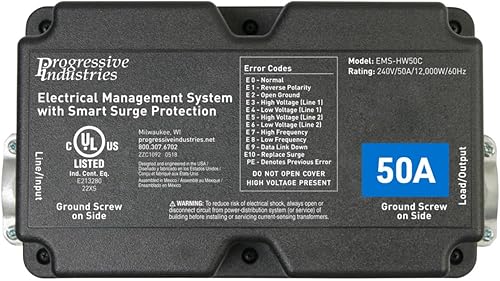
Progressive Industries EMS-HW50C (50 Amp)
 Best for portable campsite setup
Progressive Industries EMS-PT50X (50 Amp)
Hardwired vs portable RV surge protector: what is the main difference?
A hardwired protector is installed in the RV's electrical system, while a portable protector connects between the campground power source and the RV. That changes how you set up, store and monitor the equipment.
With a hardwired unit, you don't have to remember to bring a separate protector to each campsite. Installation is part of the decision, so use a qualified RV technician if you aren't comfortable working with the electrical system.
A portable unit is a separate piece of gear. You connect it at the pedestal when you arrive, then disconnect and store it when you leave.
What stays with the RV?
A hardwired protector stays with the coach. That can be convenient if one RV uses the equipment, and installation inside the RV can reduce exposure to theft at the pedestal.
A portable unit travels with you instead. That can help if you change RVs or want to use the same protector with compatible setups, but you must remember to pack it and connect it at each stop.
Which style is easier to set up at a campsite?
A hardwired unit avoids connecting a separate protector at each campsite, while a portable one avoids permanent installation in the RV. Decide which setup step you'd rather handle.
The Progressive Industries EMS-HW50C is a hardwired electrical management system with a remote display. It detects over and under voltage, open ground and neutral, reverse polarity, miswired pedestal conditions, accidental 240 V, surge failure and AC frequency issues.
The Progressive Industries EMS-PT50X is portable and comes with a cover and locking bracket. It also has a display and LED indicators for visibility in low light.
Neither format removes the need to check the pedestal before connecting the RV. An open ground warning guide can help explain one fault message you may see.
Does a portable protector need extra theft protection?
A portable protector is exposed at the campsite, so use its available security features and keep track of it. A locking bracket can help secure a compatible unit, though it doesn't make the device impossible to steal.
The EMS-PT50X includes a locking bracket. Confirm that the campsite pedestal and your preferred locking method work with it, and keep the unit covered as directed.
A hardwired protector stays inside the RV after installation, which avoids leaving that separate device at the pedestal. Consider this if you camp in places where you don't want to leave equipment outside.
Which offers more fault protection?
Compare the fault conditions each model detects instead of assuming one installation style provides more protection. Hardwired and portable describe placement, not the full feature set.
The EMS-HW50C lists a broad set of detected conditions, including voltage faults, open ground and neutral, reverse polarity, miswired pedestals, accidental 240 V, surge failure and AC frequency issues. The EMS-PT50X lists over and under voltage, reverse polarity and surge failure in its product details.
The Power Watchdog PWD50EPOH is a hardwired option with emergency power off during extreme voltage fluctuations. It also offers Bluetooth monitoring, LED diagnostics and a replaceable surge module.
For a deeper look at full power monitoring, see our guide to RV EMS surge protectors. A protector can detect certain electrical problems, but it doesn't replace safe connections and campsite procedures.
Do hardwired or portable units make monitoring easier?
A display or app can help you check status, but the monitoring method depends on the model. Choose the interface you'll actually use at a campsite.
The EMS-HW50C and EMS-PT50X both have a display, with LED indicators included on the portable EMS-PT50X. The hardwired EMS-HW50C includes a remote display, which lets you view information away from the installed unit.
The PWD50EPOH uses Bluetooth monitoring for status checks on a smartphone. Its optional RVWhisper add-on enables Wi-Fi or cellular monitoring, so account for the add-on if you want those connection types.
A display or app is useful only if you can understand the status it reports. Read the instructions before relying on any warning or deciding that a campsite connection is safe.
What should you check before buying a 50 amp protector?
Confirm your RV's service, the protector's connection style and the faults it detects before choosing. These examples are rated for 50 amp systems, but your RV may use a different service.
Check these points against your RV and the protector's instructions:
- Amperage and voltage: The two Progressive Industries models are 50 A and rated for 120–240 V; the Power Watchdog model is rated for 50 A.
- Installation: Decide whether you want a permanent installation or a portable campsite connection.
- Fault detection: Compare the specific electrical conditions each model detects.
- Monitoring: Choose among a remote display, LED indicators, Bluetooth or optional Wi-Fi and cellular monitoring.
- Campsite routine: Consider whether you want to connect and store a device every trip.
If your RV has 30 amp service, don't choose a 50 amp model based on the RV's size or appliances alone. Our 50 amp protector compatibility guide explains what to check.
Which hardwired or portable RV surge protector should you choose?
Choose hardwired for equipment that stays in the RV, and portable for a protector you can carry between compatible setups. Then compare fault detection and monitoring to decide between models.
The EMS-HW50C fits owners who want a remote display and a broad set of listed fault checks in a hardwired system. The PWD50EPOH fits those who want hardwired installation with emergency power off and Bluetooth monitoring.
Choose the EMS-PT50X if a portable connection, included cover and locking bracket fit your campsite routine. For a broader model comparison, see our guide to the best hardwired RV surge protectors.
Frequently asked questions
Is a hardwired or portable RV surge protector better?
A hardwired unit suits an RV owner who wants protection installed in the coach and doesn't want to carry a separate device to each campsite. A portable unit suits someone who prefers a simple campsite connection or may move it between RVs.
Compare fault detection, monitoring and installation needs too.
Can you move a portable RV surge protector between campsites?
Yes. A portable protector connects at the campsite, so you can disconnect it and take it with you when you leave.
Keep it with your RV gear and reconnect it at the next site, following the unit's instructions and your RV's amperage requirements.
Does a hardwired RV surge protector help prevent theft?
A hardwired unit is installed inside the RV's electrical system, which avoids leaving the protector exposed at the campground pedestal. That can reduce the opportunity for someone to take the unit, though proper installation and the device's fit with your RV still matter.
Do hardwired RV protectors offer remote monitoring?
Some include monitoring features, but the method varies. The Power Watchdog PWD50EPOH supports Bluetooth status checks, while its optional RVWhisper add-on enables Wi-Fi or cellular monitoring.
Check which connection you want before choosing a model.


