What RV Surge Protector Do I Need? A Plain-Words Guide
Choose an RV surge protector that matches your RV’s shore-power rating: use a 30 amp model for 30 amp service or a 50 amp model for 50 amp service. For broader protection, look for an EMS that checks voltage, wiring faults and other unsafe power conditions.
On this page (8 sections)
- What RV surge protector do I need for my amp service?
- Is surge protection enough, or do you need an EMS?
- Which RV surge protector features matter most?
- Should you choose a portable or hardwired RV surge protector?
- Which RV surge protector examples fit these needs?
- How do you choose between 30 amp and 50 amp protection?
- What should you check before using an RV surge protector?
- What RV surge protector do you need? Use this decision rule
The RV surge protector you need should match your shore-power rating: choose a 30 amp model for a 30 amp RV or a 50 amp model for a 50 amp RV. If you want protection from wiring faults and unsafe voltage as well as surges, compare electrical management systems (EMS) that shut power off when they detect a problem.
Start by checking the RV’s power cord, electrical panel label or owner’s manual. Then decide whether you want a portable unit at the campground pedestal or a hardwired unit installed in the RV.
What RV surge protector do I need for my amp service?
Choose a protector with the same amp rating as your RV’s shore-power connection. A 30 amp protector fits a 30 amp setup, and a 50 amp protector fits a 50 amp setup.
| RV shore power | Protector to consider | What to check |
|---|---|---|
| 30 amp | 30 amp | Fault checks, voltage protection and portable or hardwired style |
| 50 amp | 50 amp | Checks for both legs, fault alerts, shutoff behavior and installation style |
The ratings describe different electrical setups. An adapter can change the plug connection in some situations, but it does not give your RV more power or turn a 30 amp system into a 50 amp one.
If you are unsure which service your RV uses, check its power cord and manual before buying. Our 30 amp vs 50 amp RV service guide explains the difference between the two hookups.
Is surge protection enough, or do you need an EMS?
Choose an EMS if you want the device to check for common wiring and voltage faults before power reaches your RV. Surge protection alone may not check for every unsafe campground condition.
A surge protector is designed to limit damage from sudden voltage spikes. An EMS may add checks for conditions such as high or low voltage, open ground, open neutral, reverse polarity, a miswired pedestal or an incorrect voltage supply.
Features differ by model, so compare the exact faults each one detects and what it does when it finds one. Some units display a fault; others can disconnect power until conditions are safe.
A display or phone alert can help you understand what the device sees, but it does not make a questionable hookup safe to use. If you see a fault, follow the device instructions and ask campground staff or a qualified electrician to check the supply.
For a closer explanation of the protection itself, read what an RV surge protector does. If you get a fault message, our guide to what open ground means on an RV surge protector covers one common warning.
Which RV surge protector features matter most?
Choose features based on the hazards you want the device to detect and how you plan to use it. Fault coverage and a clear shutoff or warning matter more than a long feature list.
Check whether the unit monitors:
- High and low voltage, which can signal that campground power is outside the unit’s safe range.
- Open ground or neutral, which point to wiring issues at the hookup.
- Reverse polarity or a miswired pedestal, which indicate an incorrect connection.
- Missing leg or frequency problems, which may matter for some 50 amp models.
- Surge status, so you can tell whether surge protection is still active.
Also consider how you want to see the results. A built-in display or LED chart gives information at the hookup, while a phone connection can show readings or send alerts when the compatible unit supports those features.
Do not assume every device checks every fault. Compare the feature list to the RV’s service type and read the manufacturer’s instructions before using the protector.
Should you choose a portable or hardwired RV surge protector?
Choose a portable protector if you want to move it between RVs or keep its status display at the pedestal. Choose a hardwired model if you prefer a fixed installation inside the RV.
Portable models connect between the campground outlet and the RV cord. You can remove one when you leave, but it remains outdoors while connected, so consider how you will secure it and keep it protected from the elements.
A hardwired unit stays with the RV and may include a remote display. It takes more installation work and is less convenient to move to another vehicle.
Our guide to hardwired vs portable RV surge protectors walks through the trade-offs. If your unit keeps cutting power, see why an RV surge protector keeps tripping.
Which RV surge protector examples fit these needs?
These examples cover a 30 amp portable EMS, two 50 amp portable options and a 50 amp hardwired EMS. Match the amp rating first, then compare the features and installation style that fit your RV.
30 amp portable EMS
The Progressive Industries EMS-PT30X is a portable 30 amp model. Its stated checks include high and low voltage, open ground and neutral, reverse polarity, miswired pedestal, accidental 240 V and AC frequency issues.
It has an all-weather shield assembly, thermal protection and a locking bracket. Consider it if your RV uses 30 amp service and you want fault checks at the campground pedestal.
For more options in this size, compare our best 30 amp RV surge protectors.
50 amp portable EMS with phone monitoring
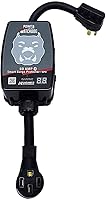
The Power Watchdog PWD50EPO is a 50 amp portable model with Bluetooth monitoring. Its app can show voltage, amperage and wattage, and the unit includes LED park power diagnostics and wireless fault alerts.
Power Watchdog says it shuts off power during an emergency and includes a 90 second delay after a fault is detected and resolved. Consider it if you want readings on a compatible smartphone as well as status at the hookup.
50 amp portable fault indicator
The Southwire Surge Guard 44390 is a 50 amp portable model with an LED fault chart. Its listed checks include open neutral, open ground, reverse polarity, open circuit or no power, missing leg voltage, surge protection status and an overheating plug or receptacle.
Its Easy-T-Pull handle and anti-theft lock ring are practical details for connecting and securing it at the pedestal. Consider it if you want a visual fault chart without selecting a Bluetooth monitoring model.
See other choices in our best 50 amp RV surge protectors guide.
50 amp hardwired EMS
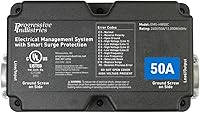
The Progressive Industries EMS-HW50C is a 50 amp hardwired model with an integrated display. Its stated fault checks include high and low voltage, open ground and neutral, reverse polarity, miswired pedestal, accidental 240 V, surge failure and AC frequency issues.
Consider it if you want protection built into the RV rather than a portable device at each hookup. Installation is a bigger part of the decision, so check the unit’s instructions and use qualified help if needed.
How do you choose between 30 amp and 50 amp protection?
Choose based on the RV’s actual shore-power connection, not the number of appliances you hope to run. A protector cannot increase the power available from a campground hookup.
A 30 amp RV generally has one hot leg, while a 50 amp RV has two. The wiring and available capacity differ, so the protector should suit the RV’s setup.
An adapter may let a plug fit a different receptacle, but the power available can still be limited by the hookup and adapter. Confirm the setup instructions for the RV, protector and adapter before connecting.
If you are still estimating your electrical load, our guide to how many amps an RV uses can help you think through appliances and service capacity.
What should you check before using an RV surge protector?
Read the device instructions and inspect the campground hookup before connecting the RV. Do not ignore a fault light or error code just to get power.
Use this quick check:
- Confirm the protector’s amp rating matches the RV service.
- Check the body, plug and receptacle for visible damage.
- Connect the protector as its instructions direct and wait for its power analysis.
- Read the display or fault chart before connecting the RV.
- Stop if the unit reports an unsafe condition, and ask campground staff to check the pedestal.
After a surge or fault, check the unit’s status before relying on it again. Some protectors indicate when surge protection has failed, while others may need inspection or replacement according to their instructions.
What RV surge protector do you need? Use this decision rule
Choose a 30 amp or 50 amp model to match your RV’s shore power. Pick an EMS when you want checks for voltage and wiring faults, then choose portable or hardwired installation based on how you camp.
For a portable 30 amp choice, start with the 30 amp protector comparison. For a 50 amp RV, compare 50 amp surge protectors and choose based on the fault checks and monitoring you want.
Frequently asked questions
What RV surge protector do I need for a 30 amp RV?
Choose a 30 amp protector for an RV with 30 amp shore power. If you want more than surge protection, look for an EMS that checks for conditions such as low or high voltage, open ground and reverse polarity.
Confirm that the protector and any adapter fit your RV and the campground outlet.
What RV surge protector do I need for a 50 amp RV?
Choose a 50 amp protector for an RV with 50 amp shore power. Compare whether it checks both legs and faults such as open neutral, missing leg or reverse polarity, and decide if you want portable or hardwired installation.
A 30 amp protector is not a substitute for a 50 amp unit.
Is an RV surge protector the same as an EMS?
No. A basic surge protector is meant to limit damage from voltage spikes, while an electrical management system can also detect unsafe supply conditions and stop power from reaching the RV.
Check the specific fault checks and shutoff behavior, since features vary by model.
Should I choose a portable or hardwired RV surge protector?
A portable protector plugs into the campground pedestal, so you can move it between RVs and see its display near the hookup. A hardwired unit stays inside the RV and avoids an exposed device at the pedestal, but installation is more involved.
Choose based on access, storage and how you use the RV.
Can a 50 amp surge protector work with a 30 amp RV?
A 50 amp protector may be usable with a suitable adapter in some hookup setups, but it does not increase the RV's available power or change its wiring. Check the protector and adapter instructions for compatibility, and make sure the protection remains appropriate for the RV.
See our guide to using a 50 amp protector on a 30 amp RV.